
A Landscape Built for Visual Storytelling
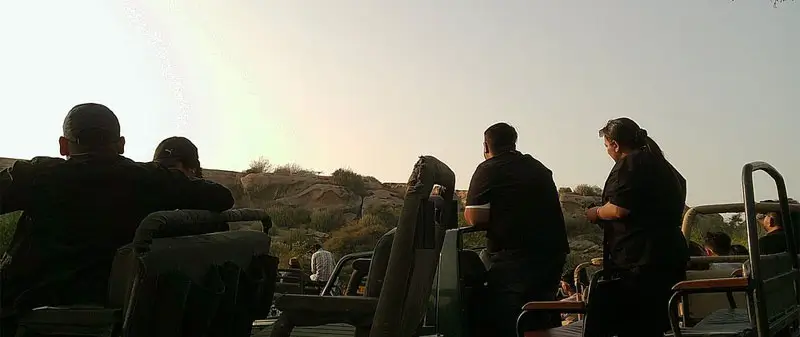
Wildlife photography depends as much on landscape as it does on animals, and Jawai offers a setting that feels purpose-built for visual storytelling. The region is defined by massive granite hills, open scrublands, water bodies, and wide skies that frame wildlife naturally rather than confining it within dense vegetation. This unique environment gives wildlife photography in Jawai a distinctive character, where every image captures both subject and setting in harmony.
Unlike forested reserves where backgrounds often blend into dark foliage, Jawai’s stone hills create contrast, depth, and scale. Leopards resting on rock faces, birds perched against open skies, and animals moving across rugged terrain all appear clearly within the frame. This clarity is one of the main reasons photographers consider Jawai Hills wildlife photography exceptionally rewarding.
Jawai is globally known for its leopard population, but what truly sets it apart is visibility. The open terrain and rocky shelters allow leopards to be seen in natural light, often during daytime. For photographers, this means fewer obstructions, cleaner compositions, and the ability to capture behavioral moments rather than distant silhouettes.
The leopard photography in Jawai experience is organic. Leopards move freely across hills, rest on sunlit rocks, and interact with their environment without artificial boundaries. This freedom allows photographers to document natural behavior, creating images that feel authentic rather than staged. The absence of cages, fences, or heavy vegetation keeps the focus on the animal and its surroundings.
Escape the noise and reconnect with nature in Jawai, where silence speaks, stars shine brighter, and ancient stone hills create a timeless atmosphere. Plan your peaceful retreat today.
Light in Jawai behaves differently throughout the day. Early mornings reveal soft hues across granite formations, while late afternoons bring golden tones that accentuate textures and shadows. Evenings introduce dramatic contrasts as stone hills absorb the fading light. This constant variation makes wildlife photography in Jawai Hills dynamic and visually rich.
Photographers often find that Jawai offers multiple shooting opportunities within a single safari. Subtle shifts in light transform familiar scenes into entirely new compositions. This natural lighting advantage reduces reliance on artificial adjustments and allows photographers to work intuitively with their surroundings.
Jawai’s wildlife exists without performance or pressure. Animals are not conditioned to follow specific routes or behaviors for sightings. This honesty creates photographic moments that feel raw and meaningful. Jawai wildlife photography focuses on patience and observation rather than pursuit.
Birdlife around Jawai Dam adds another layer to the photographic experience. Migratory and resident birds gather near water bodies, offering opportunities for close-range bird photography against reflective surfaces. Crocodiles basking near the dam, reptiles navigating rocky paths, and mammals crossing open land provide a diverse range of subjects within a compact region.
Ethical wildlife photography prioritizes respect for animals and their environment. Jawai naturally supports this approach due to its low vehicle density and absence of forced sightings. Local guides emphasize observation over interference, allowing photographers to work responsibly.
This environment appeals to photographers who value integrity as much as aesthetics. Ethical wildlife photography in Jawai means capturing moments without stress or disruption, ensuring that images reflect real interactions rather than artificial scenarios.
In Jawai, composition extends beyond the animal itself. Granite hills, open skies, shadows, and reflections all become part of the visual narrative. These elements allow photographers to create layered images that tell stories rather than isolate subjects. Jawai stone landscape photography adds context, scale, and atmosphere to every frame.
Wide-angle compositions reveal the relationship between wildlife and terrain, while close-ups highlight texture and expression. This versatility makes Jawai suitable for photographers working across different styles and focal lengths.
Photography requires patience, and Jawai provides an environment conducive to concentration. Without crowds, noise, or rushed schedules, photographers can remain present and attentive. Quiet wildlife destinations like Jawai allow extended observation, increasing the chances of capturing rare moments.
This calm atmosphere reduces distractions, enabling photographers to connect deeply with their craft. Time feels unhurried, and each safari becomes an opportunity rather than a race.
Jawai offers photographers the chance to document behavior rather than mere presence. Leopards interacting with their surroundings, birds engaging in feeding patterns, and animals responding to light and terrain all provide storytelling opportunities. Behavioral wildlife photography in Jawai elevates images from documentation to narrative.
Such moments often require extended observation, something Jawai’s relaxed safari structure naturally supports. The absence of rigid time constraints allows photographers to wait for interactions to unfold naturally.
Professional and amateur photographers alike are drawn to Jawai for its consistency and diversity. The region offers reliable leopard sightings alongside varied secondary subjects, making it suitable for extended photographic projects. Jawai Hills wildlife photography destination appeals to those seeking depth rather than quick results.
Photographers often return multiple times, discovering new perspectives with each visit. Changes in season, light, and animal behavior ensure that the landscape remains engaging across repeated journeys.
Jawai’s accessibility enhances its appeal without diminishing its authenticity. Photographers can reach the region without extreme travel while still enjoying a sense of remoteness. Staying close to wildlife zones allows early starts and extended shooting windows, which are critical for capturing ideal light conditions.
This balance makes wildlife photography in Jawai suitable for both short photographic retreats and longer focused assignments.
Beyond daytime photography, Jawai’s night skies offer opportunities for astrophotography and atmospheric landscape shots. Stone hills under starlight, silhouettes against moonlit skies, and subtle reflections near water bodies add depth to photographic storytelling. Night photography in Jawai complements wildlife imagery, expanding creative possibilities.
Transitions between day and night become visual experiences in themselves, reinforcing Jawai’s identity as a place shaped by natural rhythms.
Discover a world where raw nature meets refined luxury. Stay amidst the majestic granite hills of Jawai, enjoy serene nights under starlit skies, and create unforgettable memories in absolute tranquility.
Jawai rewards photographers who observe rather than chase. The land reveals itself gradually, offering moments that feel earned rather than manufactured. This quality defines Jawai wildlife photography experience as reflective and immersive.
Photographers leave with images that carry emotional weight — frames shaped by patience, light, and respect for the subject.
Many photographers describe Jawai as transformative. The environment encourages mindfulness, slows perception, and deepens creative awareness. The absence of distraction allows photographers to refine their craft, focusing on timing, composition, and storytelling.
This personal growth aspect makes Jawai a dream destination for wildlife photography, not only for the images captured but for the perspective gained.
Open landscapes, frequent leopard sightings, and natural light make Jawai wildlife photography highly rewarding.
Yes, leopard photography in Jawai benefits from consistent visibility due to rocky terrain.
The region supports respectful, observation-based photography practices.
Yes, Jawai Dam attracts diverse bird species ideal for bird photography.
Low visitor density ensures a calm environment for focused photography.
Wildlife, landscapes, birds, and night skies provide diverse opportunities.
Yes, visibility and calm conditions support learning and practice.
Seasonal changes alter light and behavior, offering variety across visits.
Clear skies and low light pollution support night and star photography.
Photographers seeking authentic, ethical, and visually rich environments.
Planning to visit Jawai? Need help with your stay or safari?
Get free, expert assistance from our team — no pressure, just honest guidance.
Any query? Write us mail.
info@jawainaturestay.com
Call to Inquire (08:00 - 20:00 hrs)
+91 9257995999
Talk to Experts
Whatsapp