
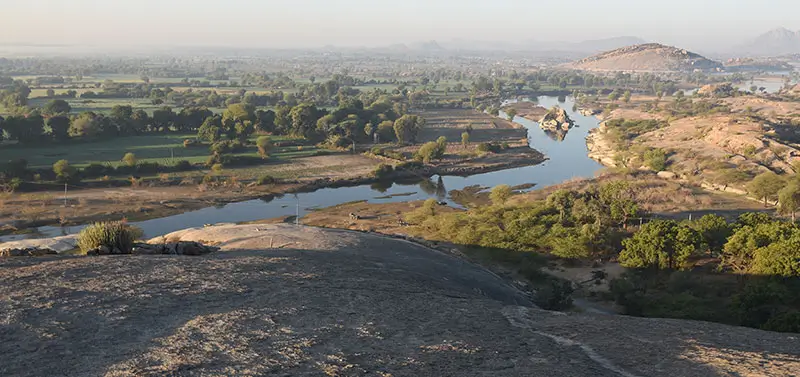
Jawai, the mysterious valley between the Aravalli hills, is often introduced as the land of leopards — but that’s only half the story. The same landscape that hides India’s most elusive cats also shelters an extraordinary variety of birds, reptiles, and mammals, making it one of Rajasthan’s richest natural ecosystems.
From migratory flamingos gliding over the Jawai Bandh to massive crocodiles basking in the afternoon sun, from owls perched inside granite caves to herds of blue bulls wandering through acacia forests — Jawai’s biodiversity is a paradise waiting to be explored.
If the leopard represents the region’s mystery, its birds and wetlands symbolize peace and balance. Together, they form a living picture of coexistence that defines Jawai’s ecological identity.
The Jawai Dam, constructed across the Jawai River, has transformed the surrounding area into an unexpected wetland ecosystem in the middle of Rajasthan’s semi-arid terrain. This massive freshwater body attracts hundreds of migratory and resident birds each year.
From October to March, the dam becomes a sanctuary for flamingos, pelicans, cranes, spoonbills, storks, cormorants, and several species of ducks. The mirror-like surface reflects their elegant movements, creating breathtaking frames for birdwatchers and photographers.
At dawn, the horizon turns pink as flamingos take flight; at dusk, the waters glow orange as egrets glide home. For anyone passionate about bird-watching in Jawai, this is an experience as mesmerizing as any leopard sighting.
Over 150 species have been recorded here, from large water birds to tiny forest songbirds. Some of the most iconic include:
Each safari or nature walk around the dam offers a new chapter in Jawai’s avian story — and with minimal crowds, you often have these sights entirely to yourself.
While leopards rule the rocky hills, crocodiles dominate the waters. The Mugger Crocodile, native to India, thrives in Jawai’s dam and its surrounding wetlands. These ancient creatures can often be seen sunbathing on the banks or floating with only their eyes above the surface.
Unlike many places where crocodiles trigger fear, here they coexist peacefully with local villagers and even livestock that come to drink. This harmony once again reflects Jawai’s rare balance between human life and wild nature.
During winter, early mornings are the best time to spot them — when sunlight warms their bodies, and fog adds mystic layers to your frame. Photographers love capturing these prehistoric giants against the golden water backdrop.
Beyond the famous leopards, Jawai Hills host several other fascinating mammals. Blue bulls (nilgai), jungle cats, hyenas, jackals, and foxes frequently appear near grasslands and rocky corridors. The area also shelters porcupines and mongoose families, adding character to the nocturnal ecosystem.
Safari guides often share anecdotes of surprising encounters — a hyena trailing a leopard silently or a fox calling across the valley under a full moon. These raw moments remind visitors that Jawai’s wilderness runs deeper than one species.
One of the most immersive ways to experience wildlife in Jawai is through guided nature trails. Unlike jeep safaris focused on big predators, these walks emphasize smaller wonders — footprints, bird calls, and native flora.
Trained naturalists lead you through grasslands, rocky slopes, and village peripheries, interpreting every sound and sign. You might discover leopard pugmarks, spot a monitor lizard basking, or photograph a bee-eater perched on a thorny branch.
Many eco-resorts arrange early morning trails around Perwa, Sena, and Bera villages, combining education with exploration. It’s an eco-friendly alternative that encourages mindfulness and respect for the land.
The Rabari tribe, Jawai’s native herders, have long lived alongside this rich wildlife. They treat leopards as divine protectors and share water with crocodiles. Their age-old belief system ensures peaceful coexistence that modern conservation efforts now celebrate.
When you walk through their villages or join them on grazing routes, you witness something profound — a lifestyle that thrives because it respects nature, not despite it. This harmony is what makes Jawai unique among India’s wildlife destinations.
Every season paints Jawai’s wildlife in a different hue.
This cyclical transformation gives photographers endless creative scope, ensuring no two visits ever feel the same.
The success of wildlife tourism in Jawai lies in its restraint. Safari operators and lodges follow ethical guidelines — limited vehicle numbers, no loud music, and strict waste management.
This respect for the ecosystem ensures that birds continue to nest undisturbed, and crocodiles remain calm in their natural surroundings. Many luxury camps in the region invest in sustainability programs, supporting local guides and wildlife monitoring projects.
For guests, it means every photo, every sighting, contributes to conservation rather than exploitation.
Have questions or want to plan a safari? Contact us anytime.
Photographers adore Jawai because of its contrast — still waters, active wildlife, and dramatic light. Early morning mist adds mystery to wide shots, while sunsets turn crocodile-lined banks into glowing silhouettes.
Birdwatchers armed with telephoto lenses can capture flamingos in synchronized flight or owls emerging from rock crevices. Wildlife documentaries and professional photography tours now include Jawai Bandh among India’s top natural frames — a recognition that celebrates its growing global appeal.
Beyond beauty, Jawai’s biodiversity plays a vital ecological role. The dam’s wetlands regulate local climate, birds assist in seed dispersion, and predators maintain balance. The entire region functions as a living classroom on coexistence.
Unlike fenced reserves, Jawai’s open ecosystem proves that wildlife and human settlements can thrive together when boundaries are built on respect rather than walls.
Visitors can spot crocodiles, blue bulls, hyenas, foxes, and over 150 bird species including flamingos and cranes.
Yes, the Jawai Bandh is one of Rajasthan’s best bird-watching zones, especially from November to February.
Very. They can be seen basking on the dam’s banks almost daily during daylight hours.
A telephoto lens (200mm+) and binoculars are ideal for capturing detailed shots of birds in flight.
Yes, guided walks are conducted by trained naturalists who ensure safe distances from wildlife.
October to April offers the richest variety of birds, reptiles, and mammals.
Yes, the Rabari community plays a key role in protecting wildlife and guiding eco-tours.
Select eco-camps organize night drives under regulation, showcasing foxes, hyenas, and owls.
Local guides offer independent nature walks, but it’s safer and more informative through registered camps.
Because it’s one of the few places in India where humans, leopards, birds, and reptiles live in harmony without conflict.
Planning to visit Jawai? Need help with your stay or safari?
Get free, expert assistance from our team — no pressure, just honest guidance.
Any query? Write us mail.
info@jawainaturestay.com
Call to Inquire (08:00 - 20:00 hrs)
+91 9257995999
Talk to Experts
Whatsapp