There is no gate here.
That is the first thing worth saying about Jawai, and almost everything else follows from it. You do not drive through an entrance, buy a ticket at a barrier and enter a wildlife area. You drive along a road with fields on either side, past a temple, past goats, past a man on a motorbike carrying a bundle of fodder taller than he is, and at some point you are in leopard country. Nobody tells you when. There is no line to cross.
The granite comes first. Great smooth domes of it rising straight out of farmland, weathered into ledges and caves and overhangs, sitting there like they were dropped rather than formed. Between them, scrub, thorn, a few fields, a village, another village. Cattle egrets on the backs of buffalo. Women walking home with water. Ordinary Rajasthan, going about a Tuesday.
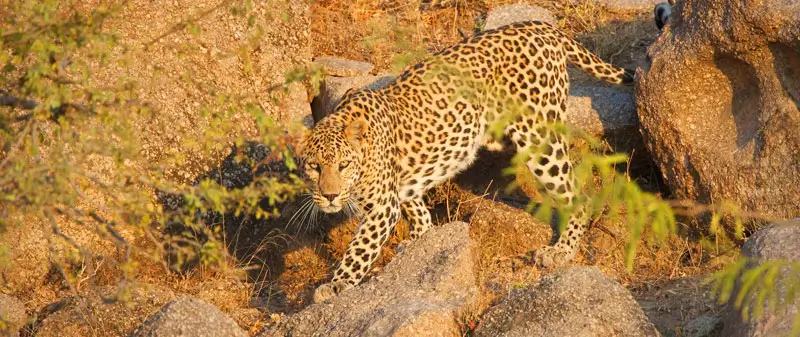
And in the caves in those rocks, leopards. Not somewhere else. There.
Most wildlife tourism in India happens inside a boundary. There is a park, the park has gates, the gates have timings, and inside the boundary the land is managed for the animals and the people have been moved out. That model works and it has saved a great deal of wildlife. It is not what this is.
The Jawai Leopard Conservation Area has no perimeter fence. The leopards move where they like, across land that belongs to farmers and herders and temples. They cross roads. They walk past houses at night. In the morning you can sometimes find pug marks on the same dust that has a tractor tyre print through it.
Which means, and this is the part visitors take a day or so to absorb, the animals here have not been contained for your convenience. They are not on a reserve. They are living in a working landscape and you are visiting it.
It changes the feeling of a sighting completely. In a fenced park, finding a big cat feels like a successful search within a known area. Here it feels like an encounter, because it is one. That leopard was not waiting on the reserve side of a boundary. It was up on a rock above a village, watching goats it has decided not to bother with.
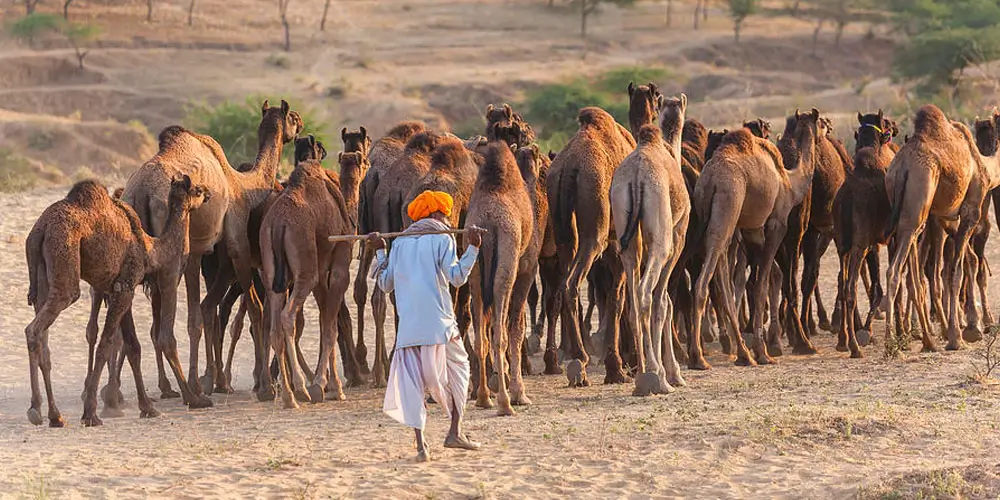
Leopards and people share this landscape and have done for as long as anybody can account for.
The Rabari, the herding community across this part of Pali district, graze their livestock among the same hills the leopards den in. They have done so for generations. There is very little conflict, remarkably little by the standards of anywhere else big cats and livestock overlap, and there is no fence keeping the two apart.
Ask a Rabari elder about it and you tend to get a shrug and a practical answer rather than anything mystical. The leopards take what they take, which is not much. The temples in the rocks are old and the caves the leopards use are older. Nobody has ever seen a reason to change the arrangement.
Visitors who have travelled a lot to see wildlife usually find this the most interesting thing about the place, more than the sightings themselves. Coexistence at this scale is genuinely rare. A walk with the Rabari tells you more about how this landscape actually functions than an afternoon in a jeep does, and we always suggest making time for one.
This needs saying because visitors ask, quietly and often apologetically, whether anything is done to bring the leopards out.
No. Nothing is baited, nothing is tied up, nothing is fed. There is no waterhole stocked to draw animals to a convenient viewing point at a convenient hour.
What our trackers do instead is read the landscape. They know which rocks hold which cats, they know the routes between them, they know where the light falls at what hour and how the animals use the heat. Most of them grew up here. That knowledge is why sightings on a Jawai leopard safari are as reliable as they are, and it is a completely different thing from the animals being arranged for you.
The difference matters. A baited sighting is a transaction. A tracked sighting is a piece of work done by somebody who has spent twenty years watching the same hills.
Sighting rates here are high. That is why people come, and we are not going to pretend otherwise.
But high is not certain, and any operator who promises you a leopard is either misinformed or lying. Some mornings the cats stay in. Some evenings the light goes before they move. It happens, and it happens to everybody.
We tell guests this before they book rather than after they have had a blank drive, because the disappointment of an unfulfilled promise is much worse than the disappointment of an empty morning. And in our experience, guests who understood the terms in advance enjoy the blank drives anyway. You still spent two hours in extraordinary country at the best time of day.
Two safaris across a two night stay gives most people what they came for. One night and a single drive is possible, but it puts everything on one roll.
A fair number of guests arrive focused entirely on the cats and leave talking about something else.
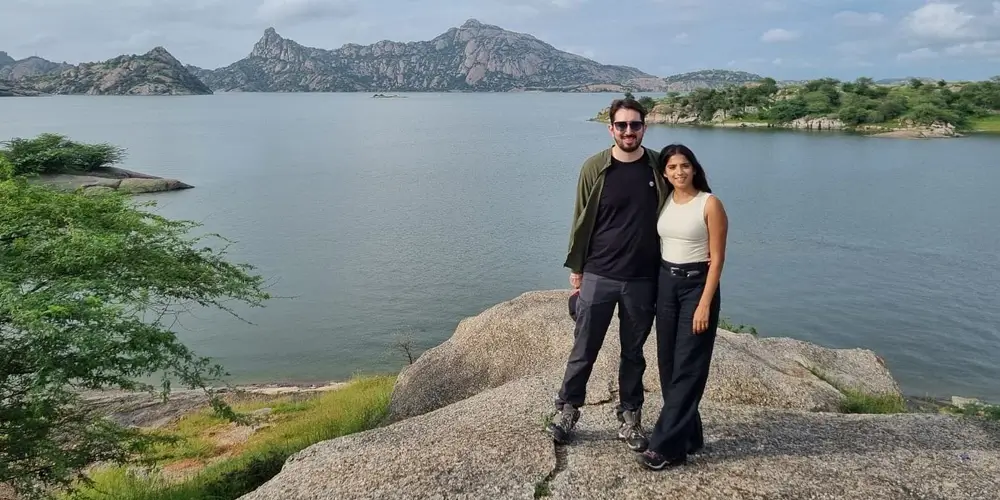
Jawai Bandh, the reservoir, holds an enormous amount of birdlife through the season. Flamingos in good water years, bar headed geese, cranes, waders in numbers, raptors working the far shore. Well over a hundred species have been recorded around the water and the surrounding scrub. Anybody who keeps a list should give birding at Jawai Dam a proper morning rather than treating it as a filler between safaris.
There are marsh crocodiles in the reservoir, visible on the banks in the warmer part of the day. There are hyena, which are commoner than most visitors realise and much less often seen. Sloth bear occasionally. Jungle cat, desert fox, wild boar, and a lot of peafowl making a lot of noise at dawn.
The hills themselves are worth walking. A jungle trail on foot in the early morning, at ground level rather than from a vehicle, changes the scale of the place entirely. You notice how much is going on in the scrub that you drive straight past.
.webp)
Because this is shared land rather than a reserve, the behaviour expected of visitors is different, and it is worth saying plainly.
Vehicles stay on tracks. Not because a rule says so on a signboard, but because those tracks run past people's fields and grazing land. Driving off them damages what somebody else depends on.
Sightings are not crowded. If a cat is out and settled, the correct thing to do is watch from a distance that does not move it, and to leave before it feels the need to. A leopard that gets up and goes because of you has not given you a better photograph. It has given you a worse morning and made the next person's harder.
Voices stay low, phones stay quiet, and nobody gets out of the vehicle at a sighting. All standard, all obvious, and all worth repeating because in an unfenced landscape the animal has every option available to it. If you make yourself unpleasant to be near, it will simply stop being near.
This is the thing that separates responsible wildlife tourism in India from the other sort. It is not really about rules. It is about accepting that you are the visitor and the animal is not obliged to accommodate you.
Here is a distinction we think is worth being straight about, because it comes up in enquiries and some places are cagey about it.
We are not an off grid camp. Our tents and rooms have power, hot water, attached bathrooms and limited wifi. There is a swimming pool. Meals are cooked properly and served on a rooftop with a view of the hills.
Some visitors want the opposite of that, and we understand it completely. Guests from Britain quite often describe the sort of place they camp at home, and it is nearly always somewhere with a fire at every pitch and nothing else at all. One couple last winter spent a good part of dinner telling us about a wildlife friendly campsite in the Kent Downs with no electricity anywhere on site, where the field is left unmown so that the insects and the birds and the bats keep using it, and where badgers come down the same lanes every night and pay the campers no attention whatsoever.
That is a different product from ours and we are not going to pretend to be it. But the underlying idea is exactly the same one we run on. Leave the landscape alone, do not arrange the animals, and let the guests take what the evening offers. They had reached that conclusion in eight acres of chalk meadow and we had reached it across a few hundred square kilometres of granite. It was a good conversation.
So the honest position is this. The wildlife here is genuinely wild and genuinely unmanaged. The stay is comfortable. Those two things are not in conflict, and anybody who tells you comfort automatically means the wildlife has been staged has not looked very hard.
The best time for leopard safari in Jawai is October through to April.
The reasoning is straightforward. The weather is workable, the vegetation is thin enough to see through, and the light at dawn and dusk is at its best. The cats are more active across a longer window when it is cool.
November to February gives the coldest mornings, and they are colder than most first time visitors expect. An open jeep at six in the morning in January is genuinely bracing. Bring a jacket you would wear at home in autumn, plus a hat. By ten you will have taken it off.
March and April warm up considerably but sightings stay good, partly because animals move more predictably towards water. May onwards is hot enough that we would not recommend it, and the monsoon changes the landscape entirely.
If you are travelling from Europe, note that this window sits neatly across the months when outdoor season at home has closed. A great many of our international guests come in exactly that gap, for exactly that reason.
Practical notes
It would be possible to build a version of this that guarantees a leopard. Put out food, fix a viewing point, run vehicles to it on a schedule. Some places in the world do exactly that.
The result would be a reliable sighting of an animal that had been arranged, and nobody who came would remember it for very long.
What people remember from Jawai is different. It is the moment on a rock in the last light when the shape you have been staring at for four minutes turns its head and turns out to be what you hoped. It is the pug mark across the tractor track. It is a herder walking home past a hill everybody knows has a cat on it, entirely unbothered.
None of that can be promised, which is precisely why it counts when it happens.
If that is the sort of wildlife you want to see, come between October and April, give it two nights, and accept the terms. The landscape has been working this way for a very long time without any input from tourism, and it will carry on doing so whether or not we get lucky on Tuesday morning.
Yes. Family rooms are available and the drives suit older children well, though very early starts are hard work for the youngest. The walks, the dam and the village visits give younger children plenty to do between safaris.
Around three hours by road from Udaipur and three and a half from Jodhpur, which makes it a natural stop between the two. The nearest railway station is at Jawai Bandh and there are airports at both Udaipur and Jodhpur.
We have power, hot water, attached bathrooms, limited wifi and a swimming pool. It is a comfortable stay in a genuinely wild landscape rather than a rough camp, and we are clear about that distinction.
Neutral colours, nothing bright or noisy. Between November and February add warm layers, a hat and something for your ears, because an open vehicle at dawn is colder than most visitors expect.
Very. The reservoir attracts flamingos in good water years, along with cranes, geese, waders and raptors. Serious birders should set aside a full morning for the dam rather than fitting it around the safaris.
Marsh crocodiles at the reservoir, hyena, sloth bear occasionally, jungle cat, desert fox, wild boar, and a great deal of birdlife. Well over a hundred bird species have been recorded around Jawai Bandh.
Yes. Leopards and the local herding communities have shared this landscape for generations with very little conflict. It is one of the few places in the world where that balance holds at this scale.
October to April. November to February has the coldest mornings and the clearest light. March and April are warmer with sightings still reliable. May onwards is too hot and the monsoon changes the terrain.
At least two, which usually means a two night stay. One drive puts everything on a single roll of the dice. Two or three across a couple of days gives most guests what they came for.
High, but never guaranteed. Sighting rates in the season are very good, particularly across multiple drives. Anyone promising a certain sighting is not being straight with you.
Completely. Nothing is fenced, baited or fed. They move freely across the hills and the surrounding countryside, and sightings depend on tracking rather than on anything being put out to draw them.
No. Jawai is a conservation area without a perimeter fence, made up of granite hills, farmland, grazing land and villages. The leopards live within a working landscape rather than inside a protected boundary, which is what makes it unusual.
Planning to visit Jawai? Need help with your stay or safari?
Get free, expert assistance from our team — no pressure, just honest guidance.
Any query? Write us mail.
info@jawainaturestay.com
Call to Inquire (08:00 - 20:00 hrs)
+91 9257995999
Talk to Experts
Whatsapp