
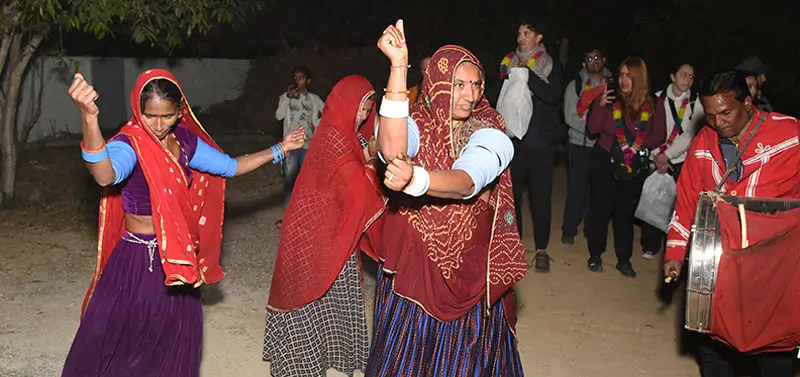
Jawai is widely known for its leopard safaris, granite hills, scenic backdrops, and crocodile zones, but the real essence of this land lies in its Rabari community — a pastoral tribe whose lifestyle, beliefs, rituals, and seasonal festivals shape the cultural identity of Jawai. Their daily life still revolves around cattle herding, devotion to their deities, traditional attire, and an unbroken relationship with nature, especially with the leopards that roam freely around their villages.
The Rabaris believe that the leopards are sacred protectors of their land, and this deep respect is also reflected in their festivals, songs, rituals, and cultural gatherings. Across the Jawai region, from Bera to Perwa, Kothar to Bisalpur, the cultural heartbeat of the Rabari community showcases unique customs that very few travellers have truly experienced.
This blog takes you inside the vibrant world of the Rabaris — their lifestyle, seasonal celebrations, folk beliefs, rituals, and the cultural festivals that keep their centuries-old traditions alive.
The Rabaris are semi-nomadic herders who have lived in the Jawai region for centuries. Their lifestyle is shaped by livestock, grazing lands, seasonal migration, and ancient cultural codes that have been passed down through generations.
Men are recognised by their white turbans, white dhoti, and kurtas, while women adorn themselves with black skirts, embroidered blouses, thick silver jewellery, and distinct tattoo markings on their hands. Their attire isn’t fashion — it’s identity, heritage, and pride.
A typical Rabari household begins its day with cattle grazing, milking, and preparing dairy products like ghee, buttermilk, and laban. Their lifestyle is simple but deeply connected to the ecosystem, and their trust-based coexistence with wildlife — especially leopards — is one of the most studied cultural relationships in India.
Many festivals celebrated by the Rabaris are linked to livestock, prosperity, seasonal cycles, and devotion to deities like Lord Shiva, Mata Devi, and Pabuji, the legendary folk deity of the herders.
Want to know the best season or plan your trip? Contact us now.
Rabari rituals revolve around purity, protection, and blessings for their animals and families. Every hut has a sacred corner where lamps, incense, and offerings are placed daily. Devotion is a natural part of their routine, not a separate activity.
They believe in ancestor blessings, nature spirits, and animal guardians. Many rituals involve chanting folk prayers, offering milk to sacred stones, lighting ghee lamps, and performing community feasts.
The bond between Rabaris and leopards is often honoured through sacred chants and prayers, reinforcing the belief that leopards are divine beings.
Festivals in Jawai are an explosion of colours, music, dances, and community gatherings. Each festival has its unique rituals, stories, and cultural symbolism. These aren’t tourist-centric events but deeply rooted traditions that reveal the spirit of Jawai’s tribal heritage.
Navratri in Jawai is a major celebration among the Rabari community. The festival honours the feminine energy through fasting, devotional songs, folk dances, and prayer ceremonies.
Women perform sacred rituals to seek blessings for the well-being of their families and livestock. Homemade ghee lamps burn throughout the night, and traditional garba-like dances are performed around temple courtyards. The rhythms of drums, claps, and folk songs fill the villages with unmatched energy.
For the Rabaris, livestock is livelihood, wealth, and heritage. Govardhan Puja is celebrated with great devotion as they decorate their cattle with colours, floral garlands, and sacred tilak marks.
In the early morning, Rabari men perform special rituals around their herds, thanking nature for the protection and prosperity it provides. The entire day is filled with devotional songs and communal meals.
One of the most culturally rich traditions of the Rabari community is Pabuji Ki Phad, an ancient storytelling performance where singers narrate the life of Pabuji, the folk deity of herders.
These performances take place during festive nights, capturing the audience with soulful music, hypnotic storytelling, and centuries-old poetic verses. The Phad (scroll painting) becomes the temple, and the performance becomes the prayer.
Travellers rarely witness this tradition, making it one of the rarest cultural experiences in Jawai.
The Rabari community often celebrates the beginning of migration seasons with small rituals and chants. Their camels, known for strength and loyalty, are decorated with colourful fabrics and bells.
These celebrations have no fixed date but are tied to seasonal changes, making them deeply personal and culturally significant.
Rabari weddings in Jawai are grand cultural showcases filled with folk dances, traditional songs, symbolic rituals, and colourful attire. Women perform mandap rituals, while men showcase strength and unity through community ceremonies.
Traditional dances are performed around bonfires, creating magical moments where community bonds become visible.
Jawai’s festivals often reflect respect for nature and wildlife. The Rabaris believe their land is blessed by divine protectors, including leopards, and their rituals reflect gratitude and coexistence.
Sacred stones, tree shrines, and natural formations become worship points during these festivals.
Monsoon is a celebrated season for Rabari herders, as the land turns lush and water bodies flourish. Many small rituals are performed to honour rainfall, fertility, and new beginnings.
Women gather in groups to sing folk songs about prosperity and good fortune, creating a vibrant cultural setting across the Jawai villages.
Travellers visiting Jawai often come for safaris, but understanding Rabari culture adds deeper meaning to the experience. The festivals and rituals offer a chance to witness authentic tribal life untouched by modernisation.
The Rabari community’s respect for leopards, their ancient traditions, and their harmonious relationship with nature make Jawai one of the most culturally rich destinations in Rajasthan.
Experiencing these festivals gives travellers an intimate view of Jawai’s heritage beyond safaris and landscapes.
The Rabari community is the primary tribe living across Jawai and its surrounding villages.
Yes, many festivals are open community celebrations, and respectful visitors can witness them.
Navratri, Govardhan Puja, and Pabuji Ki Phad performances hold major importance.
Yes, they are warm, welcoming, and proud to share their cultural heritage.
Lighting ghee lamps, offering prayers, blessing livestock, and ancestor devotion are common.
They do not worship leopards but consider them divine protectors and coexist with deep respect.
Colourful attire, folk music, ritualistic ceremonies, and community celebrations make them special.
They primarily speak a local dialect of Marwari mixed with tribal influences.
Festive months like October–March offer the most vibrant cultural experiences.
Yes, but always ask for permission out of respect for their customs.
Planning to visit Jawai? Need help with your stay or safari?
Get free, expert assistance from our team — no pressure, just honest guidance.
Any query? Write us mail.
info@jawainaturestay.com
Call to Inquire (08:00 - 20:00 hrs)
+91 9257995999
Talk to Experts
Whatsapp