
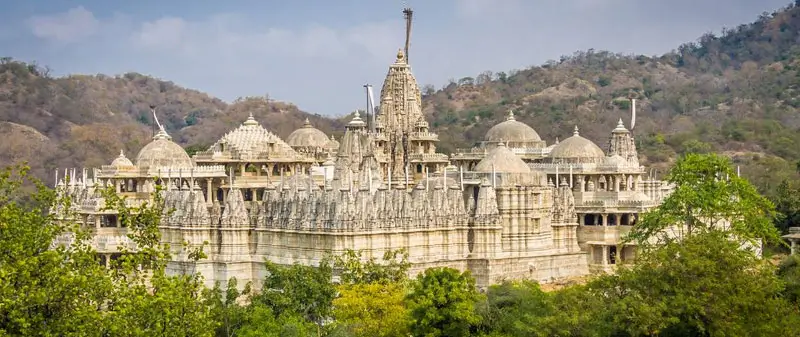
Hidden within the serene folds of the Aravalli hills in Rajasthan, Ranakpur Jain Temple stands as one of the most extraordinary examples of marble architecture in India. Known for its breathtaking carvings, spiritual significance, and structural symmetry, this temple complex attracts devotees, architecture enthusiasts, photographers, and cultural travelers throughout the year.
Unlike many historic monuments that impress from a distance, Ranakpur captivates visitors the moment they step inside its marble corridors. The play of light through intricately carved pillars, the silent spiritual atmosphere, and the scale of craftsmanship create an experience that is both devotional and architectural.
This detailed guide covers everything you need to know about Ranakpur Jain Temple history, temple timings, architectural details, entry information, travel planning, and nearby destinations.
The temple is dedicated to Lord Adinath, the first Tirthankara of Jainism. For Jain devotees, this site represents deep spiritual importance and serves as a major pilgrimage destination in Rajasthan.
The peaceful surroundings of the Aravalli hills enhance the devotional atmosphere. Unlike urban temples, Ranakpur is set amidst natural landscapes, allowing visitors to experience spiritual calm without city distractions.
The temple complex is not just a place of worship; it is a symbol of Jain dedication to art, discipline, and architectural perfection.
The construction of Ranakpur Jain Temple dates back to the 15th century during the reign of Rana Kumbha of Mewar. The temple was commissioned by a Jain businessman named Dharna Shah, who envisioned a grand marble structure after receiving divine inspiration.
With the support of Rana Kumbha, land was granted for construction in a valley surrounded by hills. The temple complex was built over several decades and involved the efforts of numerous artisans and craftsmen.
The architectural design is attributed to architect Depa, whose vision brought the elaborate structure to life. The temple’s name derives from Rana Kumbha, reflecting royal patronage during its construction.
The historical background adds depth to the spiritual and architectural value of the monument.
Explore the spiritual beauty of Ranakpur Jain Temple and combine it with a relaxing stay in Jawai. Discover stunning architecture, peaceful surroundings, and add an exciting leopard safari experience to your journey.
WhatsApp Now Contact UsThe most remarkable feature of Ranakpur Temple architecture is its intricate marble detailing. The temple complex covers approximately 48,000 square feet and is constructed entirely from light-colored marble.
The main temple is known as Chaumukha Temple, meaning four-faced, symbolizing the omnipresence of Lord Adinath. The temple has four entrances oriented in different directions.
One of the most extraordinary aspects of the structure is the presence of 1,444 marble pillars, each uniquely carved. No two pillars share the same design. The detailing includes floral patterns, mythological motifs, and geometric carvings that demonstrate exceptional craftsmanship.
The temple ceilings feature elaborate domes adorned with symmetrical patterns. Natural light enters through strategically placed openings, illuminating carvings throughout the day.
The architectural precision reflects advanced engineering knowledge for its time.
The Ranakpur Jain Temple complex consists of several smaller temples surrounding the main Chaumukha structure. These include temples dedicated to other Tirthankaras and deities.
The layout allows circumambulation while offering multiple viewing angles of intricate carvings. Visitors often spend considerable time observing the fine details on pillars and ceilings.
The temple stands elevated on a plinth, enhancing its prominence within the valley landscape.
Understanding Ranakpur Jain Temple timings helps visitors plan effectively.
The temple generally remains open for visitors from morning until evening. However, specific hours are reserved for Jain devotees performing rituals.
Tourists are typically allowed entry after late morning once prayer ceremonies conclude. Visiting during early afternoon allows better natural lighting for architectural observation.
Timings may vary slightly during festivals and special religious occasions, so confirming locally before arrival is recommended.
Visitors must follow modest dress guidelines when entering the temple premises. Sleeveless clothing, shorts, and revealing attire are discouraged.
Footwear must be removed before entering the main temple complex. Leather items are not permitted inside.
Photography may be restricted in certain areas of the temple interior. Always respect signage and instructions from temple authorities.
Maintaining silence enhances the spiritual experience for devotees.
The best time to visit Ranakpur Jain Temple is between October and March when temperatures remain comfortable for walking and exploration.
Winter mornings provide soft sunlight that enhances marble textures and carvings. The surrounding Aravalli hills appear especially scenic during cooler months.
Summer visits remain possible but involve higher temperatures during midday hours.
Monsoon adds greenery to the surrounding landscape, offering a refreshing visual contrast to white marble structures.
Ranakpur is located between Udaipur and Jodhpur in Rajasthan.
Udaipur is the nearest major city, situated approximately 90 kilometers away. Jodhpur is about 160 kilometers from Ranakpur.
Road connectivity is smooth and scenic, passing through hilly terrain. Private vehicles or hired taxis provide the most convenient access.
For travelers coming from Gujarat, road routes from Ahmedabad and Vadodara connect efficiently to the Rajasthan highway network.
While visiting Ranakpur Jain Temple, many travelers extend their journey to explore nearby destinations.
One of the most compelling nearby experiences is the Jawai Leopard Safari, located approximately 90 kilometers from Ranakpur. Jawai is known for its unique granite hills and high probability of leopard sightings.
Combining Ranakpur with Jawai creates a balanced itinerary that merges spiritual exploration with wildlife adventure. Visitors often plan a two or three-day circuit including temple darshan and safari sessions.
Other nearby attractions include Kumbhalgarh Fort, a UNESCO-listed heritage site known for its massive walls and scenic hilltop views.
The proximity of these destinations enhances Ranakpur’s appeal as part of a broader Rajasthan travel circuit.
Beyond religious significance, Ranakpur Temple architecture represents one of the finest achievements of Indian marble craftsmanship.
Art historians consider the detailing within the temple among the most elaborate in medieval India. The combination of symmetry, geometry, and narrative carvings reflects both spiritual symbolism and artistic excellence.
The temple stands as a testament to Jain patronage of art and architecture during the 15th century.
The grandeur of Ranakpur Jain Temple architecture lies not only in its visual beauty but in its symbolic precision. The Chaumukha design, meaning four-faced, reflects the concept of spiritual universality. Lord Adinath’s idol faces four directions, representing the spread of Jain teachings across the world.
The temple’s structural geometry follows sacred Jain cosmological principles. The arrangement of domes, pillars, mandapas, and sanctums is aligned in a way that creates balance and symmetry throughout the complex.
The temple contains multiple mandapas supported by the famous 1,444 intricately carved pillars. Each pillar differs in design, symbolizing individuality within spiritual unity. Some pillars lean slightly, a deliberate architectural adjustment believed to represent humility before the divine.
The ceilings are masterpieces of radial symmetry. Circular domes carved with layered patterns draw the eye upward, encouraging contemplation. The interplay of light and shadow throughout the marble corridors enhances the spiritual ambiance.
One of the most searched aspects of the temple is the 1,444 pillars of Ranakpur. Every pillar carries unique carvings, ranging from floral motifs to mythological narratives.
Visitors often try to locate two identical pillars, but none exist. This uniqueness reflects the belief that each soul’s journey is distinct.
The alignment of pillars ensures that no matter where a visitor stands inside the temple, the idol of Lord Adinath remains visible. This architectural innovation demonstrates extraordinary engineering precision for its time.
The detailing on pillars becomes even more impressive when observed closely. Fine chiseling techniques have preserved intricate patterns despite centuries of exposure.
The domes within Ranakpur Jain Temple are among the finest examples of marble ceiling artistry in India.
Each dome features concentric rings of carvings that lead inward toward a central floral motif. These layered patterns create depth and perspective, enhancing the temple’s visual complexity.
The ceilings also depict celestial beings, dancers, and symbolic elements representing purity and spiritual elevation.
Natural sunlight enters through small openings, illuminating carvings differently throughout the day. Morning visits offer softer light, while afternoon hours provide sharper contrasts.
For Jain devotees, Ranakpur is not only an architectural wonder but a living place of worship. Daily rituals include prayer ceremonies and offerings to Lord Adinath.
Visitors are encouraged to maintain silence and respect ongoing rituals. Certain areas may be reserved for devotees during specific hours.
Major Jain festivals attract increased footfall, creating a vibrant yet disciplined spiritual environment.
Understanding the devotional practices enhances appreciation for the temple’s continued religious relevance.
The marble interiors of Ranakpur Temple create exceptional photographic opportunities. However, photography rules must be respected.
The natural light filtering through carved windows produces dramatic patterns on floors and pillars. Early afternoon often provides balanced lighting for interior shots.
Wide-angle lenses capture the vastness of pillar rows, while detailed photography reveals intricate carvings.
Visitors should avoid flash photography in restricted areas.
Beyond photography, the experience of walking through marble corridors in silence creates a lasting impression.
A growing number of travelers combine spiritual exploration at Ranakpur with wildlife adventure at Jawai Leopard Safari.
Located roughly 90 kilometers away, Jawai offers a completely different landscape experience. Granite hills replace marble corridors, yet both destinations share an atmosphere of calm.
Travelers often plan:
This circuit balances architecture, spirituality, and wildlife.
The combination appeals particularly to visitors from Gujarat who seek both cultural depth and outdoor exploration.
Ranakpur’s strategic location allows seamless integration with other heritage sites.
Kumbhalgarh Fort stands nearby, known for its massive defensive walls and panoramic hill views.
Udaipur offers lakes and palaces within reasonable driving distance.
However, even as a standalone destination, Ranakpur Jain Temple provides a complete heritage experience.
Experience the calm and spiritual charm of Ranakpur along with the natural beauty of Jawai. Admire intricate temple architecture, enjoy serene surroundings, and enhance your journey with a relaxing stay and wildlife safari.
WhatsApp Now Contact UsArrive before peak midday hours to avoid larger visitor groups.
Carry modest clothing to comply with dress guidelines.
Remove footwear before entering the main complex.
Confirm Ranakpur Jain Temple timings locally before travel.
Combine the visit with nearby destinations for a richer itinerary.
Travel during cooler months for maximum comfort.
Few monuments in India display such intricate marble craftsmanship on this scale. The combination of 1,444 uniquely carved pillars, symmetrical domes, and spiritual symbolism makes Ranakpur globally admired.
Unlike many historical sites that serve only as tourist attractions, Ranakpur remains an active place of worship. This continuity adds authenticity to the experience.
Its remote valley setting preserves tranquility, preventing over-commercialization.
For heritage travelers, architecture enthusiasts, and Jain devotees alike, Ranakpur Jain Temple history and architecture represent a rare convergence of devotion and design excellence.
Standing inside the marble halls evokes a sense of awe. The silent corridors, filtered sunlight, and detailed carvings create a meditative atmosphere.
The temple’s scale does not overwhelm; instead, it invites reflection. Visitors often describe feeling grounded and peaceful after exploring the complex.
When combined with nearby destinations such as Jawai Leopard Safari, the journey becomes both spiritually enriching and visually dramatic.
It is busier during festivals but generally peaceful.
It was commissioned by Dharna Shah with support from Rana Kumbha.
Modest clothing is required inside the temple.
October to March offers pleasant weather.
Yes, Jawai is located around 90 kilometers away.
Photography may be restricted in certain areas.
It is generally open from morning to evening with specific prayer hours.
There are 1,444 uniquely carved marble pillars.
It was built in the 15th century under Rana Kumbha’s patronage.
Approximately 90 kilometers by road.

Planning to visit Jawai? Need help with your stay or safari?
Get free, expert assistance from our team — no pressure, just honest guidance.
Any query? Write us mail.
info@jawainaturestay.com
Call to Inquire (08:00 - 20:00 hrs)
+91 9257995999
Talk to Experts
Whatsapp