
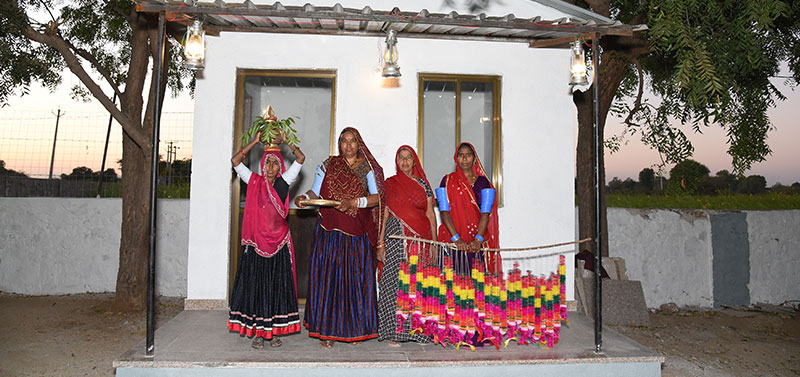
When travelers think about Jawai in Rajasthan, the first images that come to mind are the leopards resting on granite boulders or flocks of migratory birds at the Jawai Dam. But beyond wildlife, Jawai’s true spirit lies in its people – particularly the Rabari tribe, who have lived here for centuries. Known for their red turbans, embroidered dresses, and pastoral lifestyle, the Rabaris are not just shepherds but also storytellers, artisans, and cultural guardians. What makes them truly fascinating is their unique relationship with leopards, whom they consider protectors rather than threats. In this blog, we take you deep into the world of the Rabari community of Jawai, exploring their lifestyle, culture, and traditions.
The Rabaris are a nomadic pastoral tribe found across Rajasthan and Gujarat, with a significant population in the Jawai region of Pali district. The word “Rabari” literally means “outsider” or “wanderer,” reflecting their origins as nomads who moved with their herds of sheep, goats, and camels. Over centuries, the Rabaris have settled in villages around Jawai but still maintain their semi-nomadic traditions. Their primary livelihood is herding and dairy production, supplying milk, butter, and ghee to nearby towns and villages. Despite modernization, the Rabaris continue to follow their traditional lifestyle, preserving customs that are centuries old.
One of the most striking aspects of the Rabari tribe is their distinct attire. Men are easily recognized by their white dhotis, long white tunics, and bright red turbans. The turban, called “pagari,” is not just a head covering but a cultural symbol of pride and honor. Women wear black embroidered ghagras (skirts), odhnis (veils), and silver jewelry, which is considered auspicious. Intricate embroidery, often done by Rabari women, carries motifs inspired by animals, flowers, and geometric designs. This traditional attire makes the Rabaris stand out and adds vibrant color to Jawai’s rugged landscapes.
The daily routine of Rabaris revolves around their livestock. At sunrise, men take goats and sheep to graze in the fields and rocky hills around Jawai Leopard Reserve. Women stay back in villages, managing household chores, cooking, and embroidery work. The community relies heavily on milk and dairy products; chaach (buttermilk) and ghee are staples in their diet. Their homes, called “bhungas,” are simple mud huts that provide insulation against Rajasthan’s extreme heat. Despite living in modest conditions, the Rabaris maintain a close-knit community, where traditions, songs, and folklore are passed down generations.
The most fascinating aspect of the Rabari tribe in Jawai is their peaceful coexistence with leopards. Unlike other parts of India, where human-wildlife conflict often causes tension, Jawai presents a rare story of harmony. Rabaris believe that leopards are sacred protectors, often associated with local deities. Even if a leopard kills their livestock, Rabaris do not retaliate violently. Instead, they consider it as part of nature’s balance. This unique belief system has allowed leopards to thrive outside national parks, making Jawai one of the best leopard-sighting regions in the country.
Rabaris celebrate major festivals like Navratri, Holi, and Diwali, but with unique rituals that blend Hindu beliefs and tribal customs. Navratri holds special importance, with dances, songs, and worship of local goddesses. Rabari weddings are elaborate, featuring folk music, camel processions, and embroidered attire. Women’s embroidery skills are particularly valued, and their handmade garments are often given as wedding gifts. These cultural expressions preserve the Rabaris’ identity and pass on values to younger generations.
The Rabari diet is simple yet nourishing, based largely on dairy products and locally grown grains. Staples include:
Meals are often cooked over open flames, using traditional earthen pots that enhance the flavor of food. Travelers staying in Jawai often get to enjoy Rabari-style home-cooked meals, which are a highlight of cultural tours.
Rabari women are known for their exquisite embroidery work, which features mirrors, threads, and colorful motifs. This art form is more than just decoration — it represents stories of animals, gods, and everyday life. Embroidered garments and home décor items like cushion covers, wall hangings, and bags are sold in local markets, providing additional income to families. Many NGOs support Rabari women in preserving this craft, connecting them with urban markets and tourists. For visitors, buying these handmade products is a way of taking a piece of Jawai’s culture home.
While the Rabaris continue to maintain their traditions, modern influences are slowly making their way into the community. Younger generations are pursuing education, mobile phones are becoming common, and many families are diversifying income through tourism. Cultural tours, where travelers can spend time with Rabari families, are becoming popular. However, despite these changes, the tribe continues to safeguard its traditions, ensuring that modernization does not erase their heritage.
For tourists, interacting with the Rabari tribe provides a unique cultural experience that goes beyond wildlife safaris. Spending a few hours in a Rabari village offers insights into sustainable living, harmony with nature, and the beauty of community bonds. International travelers especially appreciate this authenticity, as it provides a break from urban tourism. Combining a Jawai Leopard Safari with a Rabari village walk creates a balanced itinerary that covers both adventure and culture.
Staying at Jawai Nature Stay allows travelers to not only enjoy comfortable accommodations and leopard safaris but also connect with the local Rabari culture. The resort organizes village walks, cultural evenings, and local food experiences where guests meet Rabari families and learn about their traditions.
They are a pastoral tribe known for herding livestock and living near Jawai in Rajasthan.
Men wear white dhotis and red turbans, while women wear black embroidered dresses with silver jewelry.
Because of their unique coexistence with leopards and their embroidery art.
Bajra roti, ker sangri, dairy products like ghee and chaas, and traditional Rajasthani dishes.
Many have settled in villages but still follow semi-nomadic herding traditions.
They consider leopards sacred and protectors, not enemies.
Yes, many tours include guided walks to Rabari villages.
Mirror embroidery and colorful textiles.
They primarily follow Hindu traditions, especially goddess worship.
By staying at Jawai Nature Stay, which organizes cultural tours and interactions.
Planning to visit Jawai? Need help with your stay or safari?
Get free, expert assistance from our team — no pressure, just honest guidance.
Any query? Write us mail.
info@jawainaturestay.com
Call to Inquire (08:00 - 20:00 hrs)
+91 9257995999
Talk to Experts
Whatsapp