
The Shift Toward Experiential Education
Educational travel in India is undergoing a quiet transformation. Institutions are moving away from conventional sightseeing-based trips and toward journeys that offer meaningful learning environments. Offbeat educational tour destinations in India provide students with exposure to nature, culture, and real-world systems that cannot be replicated within classrooms. These destinations support learning through observation, interaction, and reflection rather than memorization.
Student groups benefit most when learning environments are free from distraction. Crowded tourist cities often overwhelm students with noise and activity, limiting focus. Offbeat destinations offer calm settings where curiosity can develop naturally. This shift aligns with modern educational goals that emphasize experiential understanding over surface-level exposure.
Offbeat locations create conditions where students engage more deeply with their surroundings. Student group educational tours in such places allow time for observation, discussion, and analysis. Without pressure to cover multiple attractions, students can explore one environment thoroughly, strengthening learning retention.
These destinations often feature intact ecosystems, traditional communities, and unaltered landscapes. Exposure to such settings helps students understand sustainability, coexistence, and regional diversity. The educational value extends beyond academic subjects, contributing to emotional and social development.
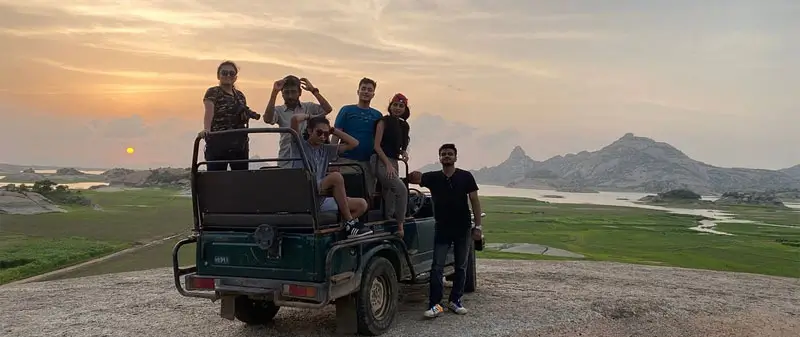
Move beyond routine educational tours and introduce students to offbeat, immersive destinations like Jawai. Here, learning blends with nature, wildlife, culture, and real-life exposure — creating unforgettable educational journeys
Nature serves as one of the most effective classrooms. Nature-based educational tours in India introduce students to ecological systems, biodiversity, and environmental processes firsthand. Observing wildlife behavior, plant life, and landforms fosters an understanding that textbooks alone cannot convey.
Offbeat destinations provide uninterrupted access to these environments. Students witness seasonal changes, animal movement, and natural balance without artificial interference. This immersive exposure supports learning in environmental science, geography, biology, and sustainability studies.
Cultural learning becomes more impactful when students observe living traditions. Offbeat destinations often host communities that maintain long-standing cultural practices shaped by their environment. Educational tours for student groups in such regions allow learners to understand how culture, livelihood, and geography intersect.
Students gain insight into rural economies, traditional knowledge systems, and social structures. These experiences encourage empathy, cultural awareness, and respect for diversity, essential components of holistic education.
Focus is a prerequisite for learning. Offbeat educational destinations offer calm atmospheres free from constant stimulation. Quiet educational tour locations help students concentrate on activities, discussions, and reflection.
Silence and open space create mental clarity. Students engage more actively in group discussions, field observations, and creative tasks when distractions are minimized. This environment supports both academic inquiry and personal growth.
Safety remains central to student group travel planning. Offbeat destinations with low traffic, limited crowds, and controlled environments often provide safer conditions than busy tourist hubs. Student group tours in offbeat locations benefit from structured activities, experienced local facilitators, and manageable surroundings.
Educational institutions value destinations where learning can occur without logistical complexity. Offbeat regions that support organized programs allow educators to focus on teaching rather than crowd management.
Offbeat destinations naturally encourage inquiry-based learning. Students observe patterns, ask questions, and form connections based on real experiences. Experiential learning tours for students foster critical thinking and curiosity.
Instead of receiving information passively, students engage actively with their environment. This approach enhances comprehension and nurtures problem-solving skills that extend beyond academic contexts.
Student learning thrives on interaction. Offbeat destinations offer open spaces where groups can gather for discussions, workshops, and reflection. Educational retreats for student groups support collaborative learning through shared experiences.
These settings reduce formality, encouraging students to participate freely. Educators often find that students communicate more openly and thoughtfully in natural environments.
Constant digital exposure affects attention and mental health. Offbeat destinations provide opportunities for digital detox, allowing students to reconnect with their surroundings and peers. Student educational retreats in nature help improve focus, mindfulness, and emotional balance.
This shift supports mental well-being, enabling students to engage more deeply with learning activities. Reduced screen time enhances observation skills and interpersonal connection.
Exposure to offbeat natural regions fosters environmental awareness. Students witness ecosystems functioning without heavy tourism influence. Educational travel for sustainability becomes meaningful when students see conservation challenges and successes firsthand.
Discussions around resource use, coexistence, and environmental responsibility gain relevance. These experiences often inspire long-term attitudes toward conservation and responsible living.
Offbeat destinations balance accessibility with seclusion. They are reachable without excessive travel while remaining free from mass tourism. Student group tours to offbeat locations benefit from manageable logistics and meaningful experiences.
This balance makes such destinations suitable for institutions planning educational travel within limited time frames while still achieving learning objectives.
Accommodation plays a vital role in educational travel. Offbeat destinations often offer nature-based stays that prioritize space, simplicity, and group comfort. Group-friendly educational accommodations support student routines and learning schedules.
Shared spaces encourage discussion and reflection, reinforcing the retreat-like atmosphere. Comfortable yet understated settings help maintain focus on learning rather than luxury.
Offbeat destinations provide flexibility for customized educational programs. Activities can be adapted to suit different age groups, subjects, and learning goals. Educational tour destinations in India that support flexible programming allow educators to design meaningful experiences.
Workshops, field studies, and reflective sessions integrate naturally into the environment, enhancing learning outcomes.
Travel in offbeat settings encourages students to take responsibility for their actions and learning. Without constant external stimulation, students become more aware of their surroundings and choices. Student learning retreats promote independence, teamwork, and self-discipline.
These qualities contribute to personal development, complementing academic growth.
Institutions increasingly recognize the value of experiential learning. Offbeat destinations align with educational goals focused on understanding, empathy, and responsibility. Offbeat educational tour destinations in India provide environments where learning feels relevant and lasting.
The combination of safety, calm, cultural depth, and natural exposure makes these destinations ideal for modern educational travel.
Give students the opportunity to experience learning beyond classrooms. Offbeat educational destinations like Jawai introduce students to nature, wildlife conservation, rural life, and cultural traditions through immersive
Educational journeys shape perspectives. Offbeat destinations offer students the opportunity to learn in environments that encourage reflection and awareness. Student group educational tours in such places leave lasting impressions rooted in understanding rather than entertainment.
These experiences contribute to lifelong learning, influencing how students engage with the world beyond academics.
They are calm, less-crowded regions offering meaningful learning through nature and culture.
They reduce distraction and support focused, experiential learning.
Yes, low traffic and controlled environments enhance safety.
Environmental studies, geography, culture, sustainability, and social sciences.
Yes, observation and interaction drive understanding.
Group-friendly stays support learning routines and comfort.
Yes, reduced distractions improve focus and engagement.
Accessibility allows both short and extended learning trips.
Calm settings support teaching and discussion.
They align with holistic education and meaningful learning goals.
Planning to visit Jawai? Need help with your stay or safari?
Get free, expert assistance from our team — no pressure, just honest guidance.
Any query? Write us mail.
info@jawainaturestay.com
Call to Inquire (08:00 - 20:00 hrs)
+91 9257995999
Talk to Experts
Whatsapp