
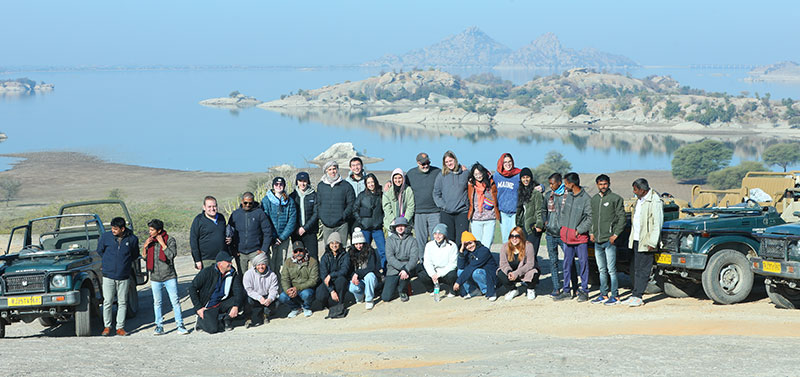
When it comes to wildlife tourism in India, names like Ranthambore, Bandhavgarh, and Jim Corbett often dominate. Yet, tucked away in the rugged hills of Pali district in Rajasthan, Jawai has built a reputation as the Leopard Capital of India. Unlike traditional reserves, leopards here are not restricted to park boundaries — instead, they roam freely among granite hills, temples, villages, and Rabari shepherd communities. This rare coexistence makes the Jawai Leopard Safari one of the most unique wildlife experiences in the world. Tourists not only get to see big cats but also immerse themselves in Rajasthan’s culture, landscapes, and traditions. In this guide, we explain everything you need to know about Leopard Safari in Jawai Rajasthan, from booking tips to safety guidelines.
Jawai is located in Pali district, Rajasthan, near towns like Sumerpur and Bali. It is well-connected yet remote enough to maintain its wild charm.
This accessibility makes Jawai a convenient wildlife getaway, especially for those combining it with Rajasthan’s cultural circuit.
Most safaris in India take place inside protected reserves with strict entry and exit rules. Jawai is different:
This combination of wildlife, culture, and landscape makes Jawai stand out among India’s safari destinations.
The ideal time for Jawai Leopard Safari depends on your interest:
For first-time visitors, winter (Nov–Feb) offers comfort and variety, while hardcore wildlife photographers prefer summer for guaranteed leopard action.
Safaris in Jawai operate twice daily:
Evening safaris are considered more photogenic, but serious wildlife lovers should try both for different experiences.
A typical Jawai Leopard Safari lasts 3 to 3.5 hours, covering rocky terrains, water bodies, and leopard territories. Travelers ride in open jeeps (gypsies), accompanied by trained naturalists and drivers. The thrill of scanning cliffs and suddenly spotting a leopard on a boulder is unmatched. Many safaris also pass by temples and villages, where leopards are often seen resting close to human activity — a rare phenomenon worldwide.
Safari costs vary depending on the operator, vehicle type, and season. On average:
Always confirm inclusions like guide fees, entry charges, and pick-up services when booking.
Leopards in Jawai are wild predators, and while they are accustomed to humans, safety rules must be respected.
Responsible tourism not only protects visitors but also preserves Jawai’s delicate balance between humans and wildlife.
While the leopard safari is the main attraction, Jawai offers many other experiences:
These activities make Jawai an all-rounded destination, combining wildlife and culture.
For photographers, Jawai is a dream. Leopards framed against temples, granite cliffs, and dramatic skies create stunning compositions.
Many professional photographers visit Jawai repeatedly for its unique frames and storytelling opportunities.
To fully enjoy safaris, staying at a reliable resort is important. Jawai Nature Stay offers:
By staying at Jawai Nature Stay, travelers enjoy not just safaris but also cultural evenings, stargazing, and village visits.
Booking through Jawai Nature Stay ensures:
Yes, if you follow guides and safety rules.
April–June offers high chances; October–March offers comfort and birds.
Around 3 to 3.5 hours.
Yes, seats are limited, advance booking is strongly recommended.
Yes, safaris are family-friendly if safety rules are followed.
Yes, crocodiles, hyenas, jackals, nilgai, and many bird species.
₹8,000–₹12,000 per jeep depending on operator.
Yes, but flash photography is not allowed.
Officially, safaris operate morning and evening; some buffer zone experiences may be offered.
Jawai Nature Stay, offering tents, family rooms, food, and guided safaris.
Planning to visit Jawai? Need help with your stay or safari?
Get free, expert assistance from our team — no pressure, just honest guidance.
Any query? Write us mail.
info@jawainaturestay.com
Call to Inquire (08:00 - 20:00 hrs)
+91 9257995999
Talk to Experts
Whatsapp