
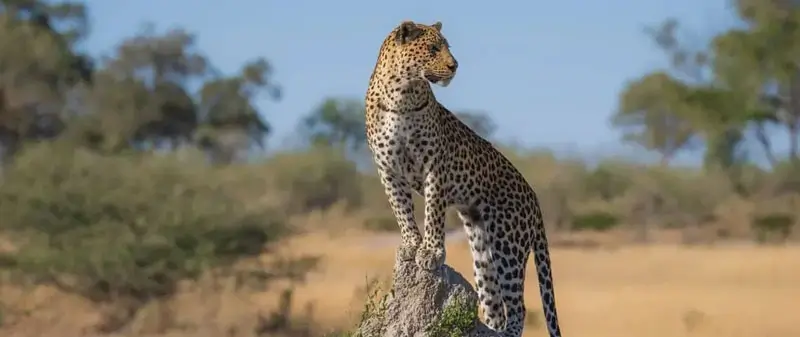
The leopard is one of the most fascinating and misunderstood big cats in the world. Known for its stealth, intelligence, and remarkable adaptability, the leopard has survived in environments where many other large predators have disappeared. From dense forests and rocky hills to grasslands and human-dominated landscapes, leopards have demonstrated an extraordinary ability to coexist, adapt, and thrive.
Unlike lions or tigers that rely on specific habitats, leopards are masters of flexibility. This quality has allowed them to spread across vast regions while maintaining strong territorial instincts and solitary lifestyles. Understanding leopards requires moving beyond myths and fear to appreciate their ecological importance, behavior, and relationship with the landscapes they inhabit.
This comprehensive guide explores everything essential about leopards, including their physical traits, hunting strategies, social behavior, communication, habitat preferences, and coexistence with humans. It offers a deeper understanding of why leopards remain one of the most resilient big cats on the planet.
Leopards are instantly recognizable by their rosette-patterned coats, which provide excellent camouflage in varied environments. Their fur coloration ranges from pale yellow to deep golden hues, adapting to regional landscapes. These rosettes break up the animal’s outline, making it nearly invisible among foliage, rocks, and shadows.
Built for strength rather than size, leopards possess powerful shoulders, strong jaws, and muscular limbs. Their compact build allows explosive bursts of speed and agility, enabling them to climb trees effortlessly while carrying prey heavier than their own body weight. This physical versatility plays a crucial role in their survival.
Among big cats, leopards have one of the most proportionate body structures, allowing them to sprint, leap, stalk, and climb with equal efficiency. Their retractable claws and padded paws ensure silent movement, making them exceptional ambush predators.
After learning fascinating facts about leopards, why not experience them in the wild? Jawai is one of the best places in India to spot these majestic big cats. Stay at Jawai Nature Stay and enjoy thrilling leopard safaris and unforgettable wildlife moments.
Leopards have one of the widest distributions among big cats. They inhabit forests, mountains, grasslands, deserts, wetlands, and rocky terrains. This adaptability has allowed leopards to survive in regions where other predators struggle.
In India, leopards occupy diverse landscapes ranging from dense forests to agricultural land and rocky outcrops. Regions like Jawai demonstrate how leopards can coexist with humans when ecological balance and tolerance exist. This adaptability is a defining characteristic that separates leopards from other large carnivores.
Leopards do not require large continuous forests. Instead, they thrive in fragmented landscapes that provide cover, prey availability, and minimal disturbance. This flexibility has contributed to their continued presence across multiple continents.
Leopards are solitary ambush predators that rely on stealth rather than endurance. They stalk their prey silently, using vegetation, terrain, and shadows to remain unseen. Once close enough, they launch a rapid attack, targeting the throat or neck to deliver a fatal bite.
Their diet is highly varied, including deer, antelope, wild boar, monkeys, birds, and smaller mammals. In human-dominated areas, leopards may adapt their diet to available prey, demonstrating remarkable survival intelligence.
One of the most distinctive behaviors of leopards is their habit of dragging prey into trees. This behavior protects kills from scavengers and competitors, allowing leopards to feed in safety. Their ability to haul heavy prey vertically highlights their exceptional strength.
Leopards are solitary animals, preferring to live and hunt alone except during mating or when females are raising cubs. Each leopard maintains a territory marked through scent, scratches, and vocalizations. These territories may overlap slightly, but direct confrontation is rare.
Territory size depends on prey availability and habitat quality. In areas with abundant prey, territories are smaller, while in sparse regions, leopards range across larger areas. This adaptability allows them to optimize energy use and survival.
Leopards avoid unnecessary conflict. When encounters occur, they rely on intimidation displays rather than physical confrontation, conserving energy and reducing injury risk.
Leopards communicate using a range of vocalizations, body language, and scent markings. Their distinctive rasping call is often heard during mating season or territorial disputes. This call travels long distances and helps individuals locate one another without direct contact.
Scent marking through urine spraying and scraping serves as a form of communication, conveying information about territory ownership and reproductive status. Visual signals such as tail movements and ear positions also play a role in communication.
These subtle communication methods help leopards maintain social boundaries while minimizing direct encounters.
Leopard reproduction is marked by secrecy and protection. Females select hidden dens among rocks, thick vegetation, or caves to give birth. Cubs are born blind and entirely dependent on their mother for survival.
The mother moves cubs frequently to avoid predators and detection. She teaches them hunting skills gradually, allowing them to observe before practicing independently. Cubs remain with their mother for an extended period, learning essential survival skills before dispersing.
This intensive parental investment increases cub survival and prepares them for solitary life.
Leopards are among the most intelligent big cats. They learn quickly, adjust hunting techniques, and modify behavior based on environmental changes. This intelligence allows them to navigate complex landscapes and coexist near human settlements.
In regions like Jawai, leopards exhibit tolerance toward human presence, adjusting activity patterns to avoid conflict. This behavioral flexibility highlights their cognitive abilities and contributes to long-term survival.
Leopards also demonstrate problem-solving skills, such as accessing prey in challenging terrain or altering movement patterns based on human activity.
Jawai is famous for its unique landscape and thriving leopard population. If you want to witness these incredible big cats in their natural surroundings, plan your stay at Jawai Nature Stay and enjoy an unforgettable wildlife adventure.
Leopards play a crucial role in maintaining ecological balance. As apex or near-apex predators, they regulate prey populations, preventing overgrazing and habitat degradation. Their presence contributes to healthier ecosystems and biodiversity.
By preying on a wide range of species, leopards help maintain balance across multiple trophic levels. Their ecological role extends beyond hunting, influencing prey behavior and habitat use.
Human–leopard coexistence is one of the most complex aspects of leopard ecology. Unlike many predators, leopards can adapt to human-altered landscapes. Successful coexistence depends on tolerance, awareness, and respect.
Regions where communities understand leopard behavior tend to experience fewer conflicts. Education, habitat protection, and responsible tourism contribute to coexistence models that benefit both humans and wildlife.
Jawai stands as a notable example of coexistence, where leopards live alongside villages with minimal conflict due to cultural attitudes and ecological understanding.
Despite their adaptability, leopards face threats from habitat loss, fragmentation, poaching, and human conflict. Expanding infrastructure and land-use changes reduce safe corridors and prey availability.
Conservation efforts focus on habitat connectivity, community engagement, and conflict mitigation. Protecting leopards requires understanding their adaptability while addressing the pressures they face.
Leopards captivate humans because they embody mystery, strength, and resilience. Their ability to remain unseen, their silent movement, and their adaptability inspire fascination and respect.
For wildlife enthusiasts, photographers, and researchers, leopards represent the ultimate symbol of wilderness intelligence. Observing a leopard in its natural habitat offers insight into the delicate balance of nature.
Fear often stems from misunderstanding. Learning about leopard behavior reveals an animal focused on survival rather than aggression. Leopards avoid humans whenever possible, relying on intelligence rather than dominance.
Education and awareness transform fear into appreciation, fostering coexistence and conservation support.
Leopards symbolize survival in changing landscapes. Their continued presence reflects resilience and adaptability, qualities essential in a rapidly evolving world. Protecting leopards means preserving ecosystems that support diverse life forms.
Their adaptability, climbing ability, and intelligence set them apart.
Leopards generally avoid humans and prefer stealth over confrontation.
They inhabit forests, mountains, grasslands, deserts, and rocky terrains.
They use ambush techniques, relying on stealth and surprise.
To protect their kill from scavengers and competitors.
Yes, they prefer solitary life except during mating and cub rearing.
Cubs remain with their mother for an extended period to learn survival skills.
Yes, they can adjust behavior to coexist near human settlements.
Habitat loss, poaching, and human conflict are major threats.
They regulate prey populations and maintain ecological balance.

Planning to visit Jawai? Need help with your stay or safari?
Get free, expert assistance from our team — no pressure, just honest guidance.
Any query? Write us mail.
info@jawainaturestay.com
Call to Inquire (08:00 - 20:00 hrs)
+91 9257995999
Talk to Experts
Whatsapp