
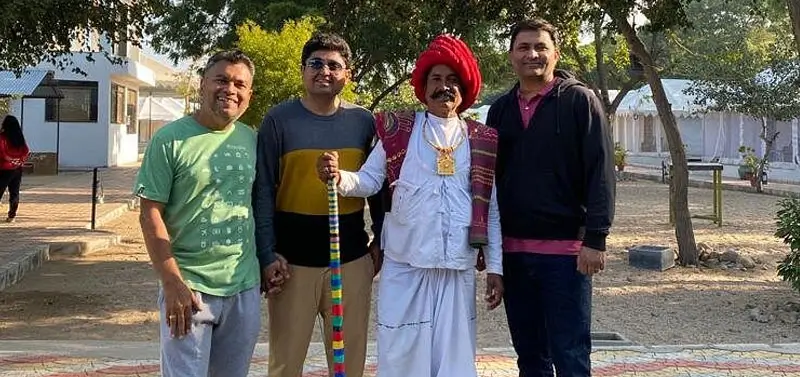
Away from city lights and resort walls, there lies another side of Jawai — one that beats with rhythm, warmth, and soul. Beyond its leopard safaris and scenic granite hills, Jawai’s villages hold the true spirit of Rajasthan — humble, welcoming, and deeply connected to nature.
Life here moves at the pace of sunrise and sunset. The sounds of cattle bells echo across the valleys, women draw water from ancient wells, and children run barefoot on dusty paths lined with neem trees. It’s raw, real, and profoundly peaceful.
For travelers seeking authenticity, Jawai’s local communities open a window into timeless rural traditions, coexistence with wildlife, and the quiet pride of self-sustained living.
The Rabari tribe forms the heart of Jawai’s identity. Recognized by their striking red turbans and white dhotis, the Rabaris are semi-nomadic herders who have lived in harmony with leopards for centuries.
Their relationship with nature is rooted in respect, not dominance. They graze livestock near leopard habitats, yet rarely face conflict. Instead of fearing these predators, they consider them sacred — protectors sent by their deity.
Watching a Rabari shepherd guide his goats through the rocky trails of Bera or Sena village is like witnessing an age-old rhythm that has never broken. Travelers often join them on morning walks, listening to stories of faith, folklore, and coexistence.
Village life here is defined by simplicity and routine. Mornings begin with women sweeping courtyards and decorating doorsteps with rangoli. Men set off to the fields or take livestock to graze along the Jawai River. Children walk to small local schools, their laughter echoing across the hills.
Evenings bring everyone together — families gather around the chulha (mud stove), sharing stories as the aroma of wood-fired rotis fills the air. The night sky above glitters with countless stars, and life feels grounded in its purest form.
Visitors staying at Jawai Nature Stay often describe village visits as their most heart-warming memory — because beyond the safaris, it’s these smiles and gestures that make Rajasthan unforgettable.
Houses in Jawai’s villages tell stories too. Built using mud, cow dung, and local stone, they remain cool during scorching summers and warm during chilly winters. Walls are often hand-painted with geometric motifs and folk art that represent prosperity and faith.
Courtyards serve multiple purposes — from cooking spaces to gathering points where elders share wisdom. The roofs are thatched or tiled, blending beautifully into the natural surroundings.
This architectural simplicity reflects eco-living long before the term existed — proof that sustainability is part of Rajasthan’s tradition, not a modern invention.
In Jawai, women are pillars of strength. Draped in vibrant ghagras and odhnis, they manage homes, farms, and cattle while maintaining age-old customs. They spin wool, prepare traditional meals, and participate in every festival with unmatched enthusiasm.
Their jewelry — silver anklets, nose rings, and bangles — carries cultural significance passed down generations. Many eco-resorts collaborate with local women for handicraft workshops, giving travelers a chance to appreciate the artistry behind every handmade piece.
Interacting with them gives a glimpse into the endurance, dignity, and joy that define Rajasthani womanhood.
Villages around Jawai celebrate festivals not as events but as emotions. The air fills with drums, colors, and folk songs that tell tales of gods, heroes, and harvests.
Some of the most beautiful celebrations include:
Guests visiting during these times witness the heart of Rajasthan — unfiltered, communal, and full of life.
Curious about local life in and around Jawai? Reach out to us for more info.
No journey through Jawai’s villages is complete without tasting their food. Meals are prepared with ingredients sourced straight from nearby farms — pearl millet, lentils, ghee, and buttermilk forming the staples.
Favorites include Bajra Roti, Ker Sangri, Rabodi ki Sabzi, and Chaas. Every meal is cooked on open firewood, served with affection, and eaten by hand — reinforcing a connection between food, family, and nature.
Guests can join cooking sessions with local families to learn these recipes, turning dining into a cultural exchange rather than a mere activity.
The communities of Jawai live in harmony with their environment. Water is conserved through traditional wells and step ponds. Waste is reused or composted. Homes are built with locally available materials that leave minimal ecological footprint.
These practices, followed for generations, make Jawai a model of sustainable living. Tourists visiting the region often feel inspired to carry this simplicity home — a reminder that balance with nature is not luxury, it’s necessity.
The creative pulse of Jawai flows through its artisans. Women weave woollen blankets, men carve tools from wood, and musicians play traditional instruments like sarangi and dholak during evening gatherings.
Many resorts organize folk music nights, where local performers sing about love, bravery, and the bond between humans and nature. These soulful melodies under starlit skies create moments that feel timeless.
Every craft, every song, every handmade object carries emotion — a reflection of life lived with purpose and pride.
Community-based tourism in Jawai ensures that travelers experience authentic rural life while locals benefit from sustainable income. Guided village walks, handicraft sales, and homestyle meals directly support the people who make this region special.
Guests don’t just “visit” — they participate. They milk cows, try spinning wheels, learn Rajasthani greetings, and leave with friendships that outlast their trip.
It’s a model of tourism built on empathy and respect — where both guest and host grow richer in experience.
While leopard safaris showcase Jawai’s wild beauty, the villages reveal its heart. The people here embody coexistence — a living example of how humans and nature can share space gracefully.
Watching a shepherd smile as a leopard walks past his field tells you everything you need to know about harmony. This emotional balance is what makes Jawai not just a destination, but a philosophy — where modern travelers learn ancient lessons of respect and resilience.
They are the traditional herding community known for their deep respect for nature and peaceful coexistence with leopards.
Yes, guided village walks and cultural visits are completely safe and often organized by eco-resorts.
Handicraft workshops, folk music nights, cooking sessions, and farm visits with local families.
Yes, but visitors are encouraged to ask permission before taking portraits out of respect.
Bera village is the main hub, surrounded by leopard hills and traditional Rabari settlements.
Absolutely — community tourism provides employment, supports education, and sustains cultural practices.
Some eco-resorts offer immersive rural stays or day-long cultural experiences within local homes.
From October to March when weather is pleasant and festivals are celebrated.
Yes, meals are freshly prepared using hygienic practices and locally sourced organic produce.
Because it reveals the soul of Rajasthan — hospitality, simplicity, and the human connection behind the wild beauty.
Planning to visit Jawai? Need help with your stay or safari?
Get free, expert assistance from our team — no pressure, just honest guidance.
Any query? Write us mail.
info@jawainaturestay.com
Call to Inquire (08:00 - 20:00 hrs)
+91 9257995999
Talk to Experts
Whatsapp