
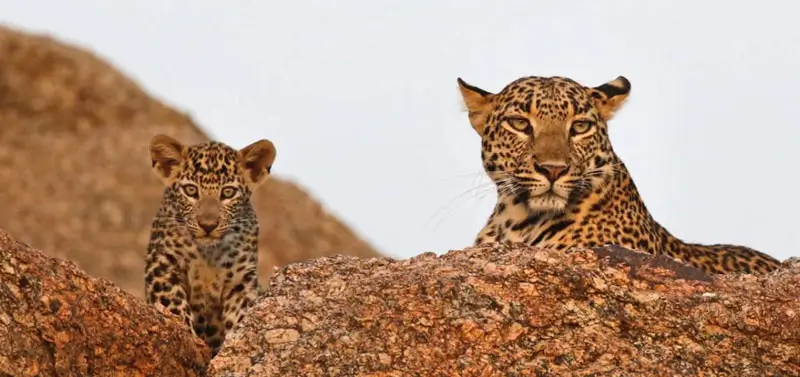
Jawai’s granite hills, peaceful landscape, and free-roaming leopards have given rise to countless stories, local legends, and assumptions among travellers. Some believe Jawai is unsafe because leopards live close to villages, while others assume wildlife sightings are guaranteed on every safari. Many travellers even think Jawai is a dense forest, similar to Ranthambore or Jim Corbett, when in reality it is a completely different ecological system shaped by granite boulders and ancient rock formations.
Myths spread quickly, especially when the destination is remote, wild, and mysterious. But the reality of Jawai is far more fascinating — and much safer — than people imagine. This blog clears the confusion by presenting true facts about leopard behaviour, traveller safety, local coexistence, and the spiritual stories that influence Jawai’s identity.
The Rabari community living in Jawai has maintained a harmonious relationship with wildlife for centuries. Their belief that leopards are divine protectors has shaped a culture where humans and predators share the same land without conflict. Understanding these cultural nuances helps travellers appreciate the region beyond safari sightings and landscapes.
This detailed guide separates myths from facts, offering a deeper insight into what Jawai truly represents.
The biggest misconception is that Jawai is unsafe due to leopards staying near temples, houses, and grazing fields. Many first-time travellers assume predators attack humans or create conflict.
The real picture is the opposite. Jawai has one of the highest human–leopard coexistence success rates in India.
For decades, leopards have lived peacefully around villages without harming people. This is because:
Leopards consider livestock easier prey, not humans
They avoid direct conflict with people and choose goats, sheep, and small animals over humans.
Rabari culture respects wildlife
The Rabari community believes leopards are connected to divine protection. Their respectful behaviour keeps conflict low.
Leopards in Jawai are habituated to human presence
They are used to seeing people, vehicles, and daily village life. So instead of aggression, they maintain distance and harmony.
This makes Jawai one of the safest wildlife destinations in the country.
Many travellers expect Jawai to be a dense jungle with closed canopies and deep forest tracks.
The beauty of Jawai lies in its open terrain, rock formations, caves, scrublands, and water bodies. It is a unique habitat where:
Travellers often feel surprised seeing how different Jawai looks compared to traditional forests.
Clear your doubts & book your wildlife experience with expert help.
Many travellers assume that every safari ensures leopard sightings because of photos and videos online.
Jawai has excellent sighting chances and is known for consistent leopard activity, but no genuine wildlife destination can promise 100% sightings.
Reasons include:
However, Jawai still offers one of India’s best leopard sighting ratios, making it a dream location for wildlife photographers.
Because leopards walk near temples, roads, and houses, travellers assume they may attack.
These leopards have developed an understanding of human presence. They prefer staying at a safe distance and rarely show aggression.
Their calm nature comes from:
This balance creates a peaceful environment for both humans and wildlife.
Many travellers think Jawai has only one attraction — leopards.
Apart from leopards, Jawai is home to:
The stunning sunrises, sunsets, granite peaks, and riverside views make it a nature lover’s paradise.
Some visitors think the rugged landscape may be unsafe for children or seniors.
Families, children, and elderly travellers visit Jawai throughout the year. Safaris are smooth, safe, and comfortable.
Many resorts offer:
This makes Jawai suitable for senior citizens, couples, and families.
Social media often exaggerates leopard movement, making travellers think predators walk everywhere after sunset.
Leopard movement patterns depend on:
They don’t wander casually into all villages or roads. Their movement is predictable to trained trackers, making safaris smooth and structured.
Travellers unaware of local life consider Jawai only a wildlife destination.
The Fact: Jawai Has Deep Cultural, Tribal & Spiritual Roots
The region is a rich cultural landscape shaped by the Rabari community, temples on hilltops, ancient rock shelters, sacred caves, and folk rituals. Cultural tours reveal a completely different side of Jawai.
Many assume travelling to Jawai is difficult due to its rural setting.
The Fact: Jawai Is Easily Accessible from Major Cities
Good road connectivity from:
makes Jawai a very easy destination to reach.
Yes, Jawai is extremely safe due to the harmonious coexistence between humans and wildlife.
Attacks are almost unheard of because leopards avoid direct contact with humans.
Abundant prey, spiritual beliefs of locals, and stable habitats maintain calm behaviour.
No, it is a rocky landscape with natural caves, hills, and scrublands.
Sightings are frequent but not guaranteed, as wildlife behaviour can vary.
Yes, it is a safe and comfortable destination for families and seniors.
Early morning and sunset safaris provide the best chance.
No, it is well-connected by road from major Rajasthan and Gujarat cities.
A safari is essential for sightings and understanding the landscape.
Yes, the Rabari community’s lifestyle, beliefs, and traditions offer beautiful cultural experiences.

Planning to visit Jawai? Need help with your stay or safari?
Get free, expert assistance from our team — no pressure, just honest guidance.
Any query? Write us mail.
info@jawainaturestay.com
Call to Inquire (08:00 - 20:00 hrs)
+91 9257995999
Talk to Experts
Whatsapp