
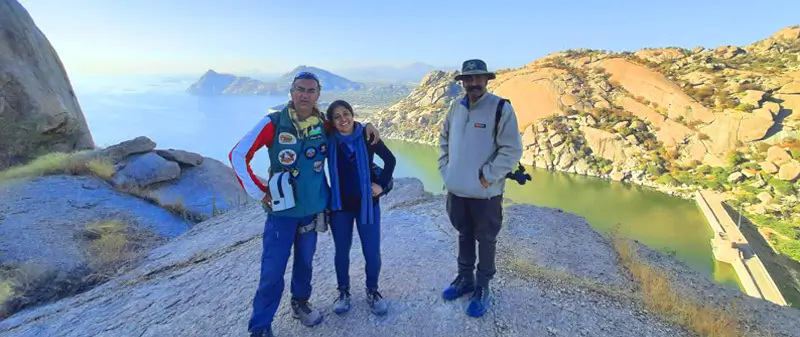
A wildlife trip does not need to be physically exhausting to feel worthwhile. Jawai is particularly suitable for older travellers because the main wildlife activity takes place in a safari vehicle, accommodation can be selected according to mobility requirements, and a two or three night stay leaves enough time to rest between outings.
A well-arranged Jawai safari package for senior citizens should be very different from a rushed group tour.
There should be no late night arrival followed by a pre-dawn safari. There should be no unnecessary hotel changes, no pressure to climb difficult rocks for a photograph and no schedule containing a morning safari, distant sightseeing and another safari on the same day unless the guests specifically want that pace.
The better structure is simple: arrive during daylight, settle into the accommodation, eat comfortably, take one private safari, rest properly and add a second wildlife drive only when everyone feels comfortable.
Jawai's landscape makes this possible.
The region is known for free ranging leopards living among granite hills, along with birdlife, rural scenery and the Jawai reservoir. The Jawai leopard safari generally takes place in an open Gypsy and lasts around three hours.
At Jawai Nature Stay, a private leopard safari is currently priced at approximately ₹4,500 per Gypsy per safari. Current seasonal timings are approximately 5:00 AM–8:00 AM and 5:00 PM–8:00 PM during summer, and 6:00 AM–9:00 AM and 4:00 PM–7:00 PM during winter.
For many senior travellers, the winter evening drive can be more comfortable than waking before sunrise, although temperature, personal routine and mobility should determine the choice.
A comfortable two night stay for a senior couple can broadly require around ₹20,000–₹35,000, including accommodation, meals and two private safaris but excluding a long distance taxi. Better room categories, an SUV transfer and additional services can take the total higher.
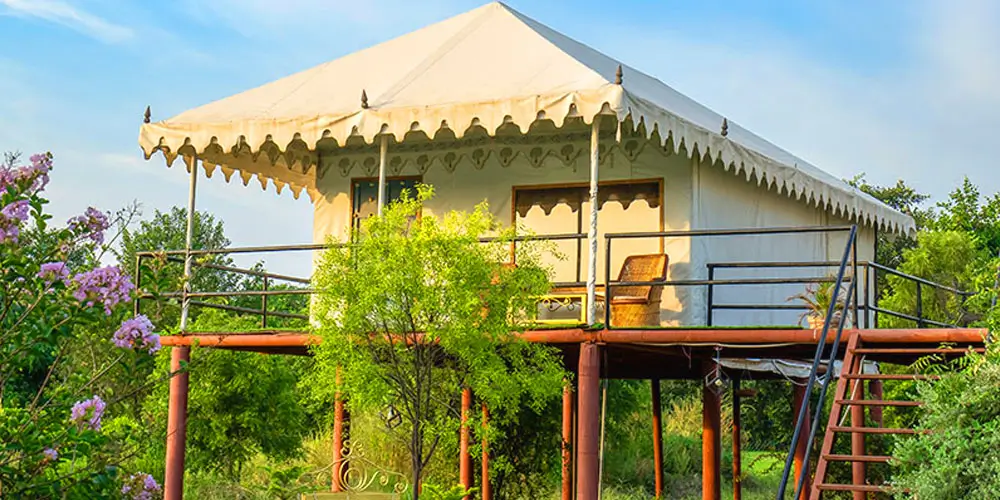
The most important part of a senior friendly Jawai safari package is not the safari vehicle. It is the accommodation.
A beautiful room is of little value if reaching it requires climbing a long staircase several times a day.
Before booking, ask the property specifically whether a ground floor room or easy access tent is available. Do not rely on photographs alone. A property may appear level in promotional images while individual rooms are reached through steps, uneven paths or raised platforms.
Ask how far the room is from the restaurant.
For younger travellers, a five minute walk across a resort may be pleasant. For someone with limited mobility, the same walk several times a day can become tiring.
The bathroom also deserves attention.
Ask whether the shower has easy entry, whether the floor becomes slippery when wet and whether grab support can be provided if needed. If a guest uses a walking stick, walker or wheelchair, communicate this before paying the booking amount.
Room comfort matters during the middle of the day.
A comfortable stay in Jawai for senior citizens should ideally have reliable air-conditioning during warmer periods, adequate winter bedding, hot water and a good mattress.
Heating arrangements should be confirmed for cold weather travel.
Rajasthan's winter days can feel pleasant, but early mornings and nights in open rural areas can be much colder than visitors expect.
Meals are another major consideration.
A half board or full board package is particularly convenient because guests do not need to leave the property searching for restaurants.
Ask whether less spicy food can be prepared.
Many senior travellers prefer simple meals while travelling, and a good property should be able to provide options such as rice, dal, vegetables, soup, curd, bread and lighter preparations when requested in advance.
Breakfast timing should work around the safari.
If a morning safari finishes around 9:00 AM in winter, the kitchen should still be ready to serve breakfast after guests return.
These details matter far more than decorative luxury.
.webp)
Both morning and evening safaris can be rewarding, but they place different demands on the traveller.
At Jawai Nature Stay, current summer leopard safari timings are approximately 5:00 AM–8:00 AM and 5:00 PM–8:00 PM.
Current winter safari timings are approximately 6:00 AM–9:00 AM and 4:00 PM–7:00 PM.
Exact times should be reconfirmed at booking because daylight conditions can alter safari schedules.
For a senior traveller who finds very early mornings difficult, an evening drive is often the more comfortable first safari.
The guest can arrive at Jawai, rest, have tea and take an evening safari only if there is enough time before departure.
However, a safari should never be scheduled immediately after a long road journey.
Someone travelling three or four hours from Udaipur or Jodhpur may benefit more from resting on arrival and taking the following morning or evening drive.
Winter mornings require warm clothing.
The safari vehicle is open, and the wind created while driving can make the temperature feel lower. A warm jacket, scarf or shawl and covered footwear are useful.
Summer morning drives begin earlier but can be preferable to the heat later in the day.
Evening summer drives start around 5:00 PM and continue until approximately 8:00 PM.
The private Jawai safari price currently listed by Jawai Nature Stay is approximately ₹4,500 per Gypsy.
Private use is particularly useful for senior travellers.
The driver can keep the pace appropriate for the guests, subject to wildlife conditions and route requirements. There is also no pressure created by unrelated passengers wanting to remain out longer.
Before departure, tell the driver about any mobility difficulty.
The safari route can involve rocky and uneven terrain. Guests with serious back discomfort or difficulty handling repeated vehicle movement should discuss this with the property before booking.
There is no requirement to prove anything by completing a difficult route.
Comfort should determine the outing.
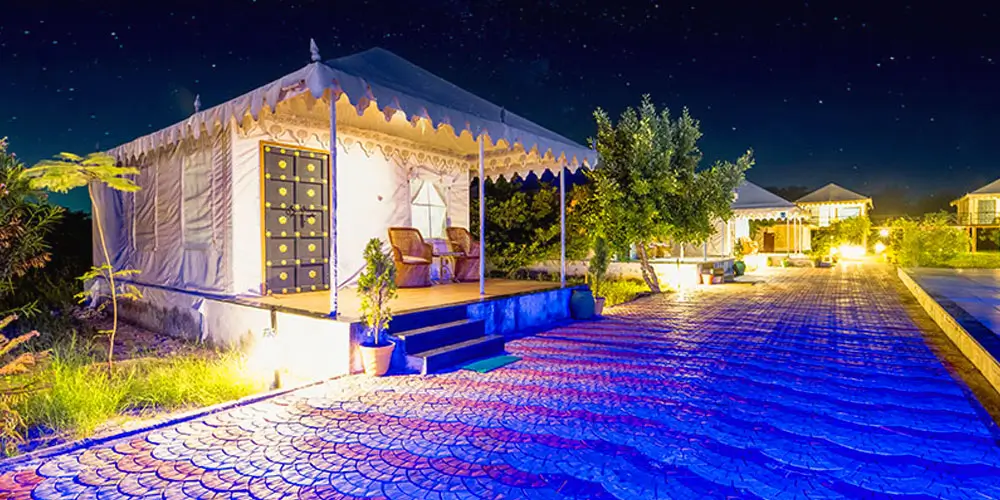
A two night stay should begin with a daytime arrival.
For travellers coming from Udaipur, Jodhpur or another Rajasthan city, aim to reach the property by early or mid afternoon.
Check in and rest.
Do not automatically book the first available safari simply because there are several hours left in the day.
After a long drive, tea, a shower and an early dinner can be a better use of the evening.
The following morning can begin with a safari if the guests are comfortable waking early.
During winter, the current morning drive begins around 6:00 AM and returns around 9:00 AM. In summer, it currently operates around 5:00 AM–8:00 AM.
Return to the accommodation for breakfast.
The rest of the morning should remain free.
A senior friendly schedule should include several hours when nothing is compulsory.
Lunch can be followed by rest.
If the guest feels energetic, a later outing around Jawai Dam can be considered. Birdwatching and landscape viewing can provide an enjoyable contrast to the more rugged leopard safari.
Binoculars are useful because birds and crocodiles may be viewed from a distance.
Guests should not walk close to unsafe reservoir edges or approach crocodiles for photographs.
The second evening can be used for another private leopard safari.
Alternatively, skip it.
One of the benefits of a private holiday is that travellers do not have to complete every activity simply because it was available.
The second morning can remain free for a relaxed breakfast and checkout.
For travellers who dislike early departures, a three night Jawai stay is even better.
The additional night allows wildlife activities to be distributed across several days rather than concentrated into one.
A three night schedule can include one evening safari, one morning safari, Jawai Dam and an entire half day with no scheduled activity.
That is a far better rhythm for many older travellers.
Understanding the safari before arrival helps travellers decide whether it suits them.
Jawai is not a zoo or enclosed wildlife park.
Leopards move freely across a landscape of granite hills, caves, scrub, fields and villages. Safari drivers search the broader habitat and watch known movement areas.
A leopard may be visible high on a rocky formation.
It may also remain hidden.
No responsible operator can guarantee a sighting.
This is particularly important when buying a Jawai leopard safari package. The payment is for the vehicle, driver and wildlife activity—not for a guaranteed animal appearance.
Binoculars make the experience considerably easier for older guests because animals can be viewed without straining to see a distant hillside.
Guests who wear prescription glasses should carry them.
A camera with a zoom lens is useful but not essential.
The vehicle itself requires some physical ability to enter and exit. Senior travellers with knee or hip limitations should ask whether a small step or assistance can be provided.
Getting into a high safari vehicle may be more difficult than sitting inside it.
Once the drive begins, some tracks can be uneven.
Sit in the most comfortable available position and tell the driver when a section feels too rough.
Wildlife viewing should not require unnecessary discomfort.
Travellers should also carry only essential belongings.
A small bag containing water, medication, glasses, phone, tissues and a warm layer is easier to manage than several loose bags inside the Gypsy.
During winter, a blanket can be useful if the property provides one.
During warmer months, sun protection becomes important.
A hat should fit securely enough that it does not blow away while the vehicle is moving.
Senior travellers should keep regular medication in hand luggage rather than inside a suitcase stored elsewhere.
Bring enough medication for the full journey plus a reasonable reserve in case road or flight schedules change.
Prescription details should also be available.
Jawai is a rural wildlife destination, not a large metropolitan centre. Travellers who require a specific medical service should understand this before booking.
The accommodation should be informed in advance about important accessibility requirements.
If refrigerated storage is needed for medication, confirm that the property can provide it reliably.
Food requests should also be sent before arrival.
Guests requiring low spice meals, reduced salt or specific ingredients should not wait until dinner to mention them.
Hydration is important even when the weather does not feel extremely hot.
Carry drinking water on safari and during road transfers.
At the same time, guests who need frequent washroom access should consider this when choosing a three hour safari. Facilities are not necessarily available throughout a wildlife drive.
Discuss this with the safari provider before departure.
Comfortable footwear is preferable to sandals with slippery soles.
Even travellers who do not intend to walk far may need to step onto uneven ground when entering or leaving the vehicle.
A walking stick should be carried if normally used.
Do not leave a mobility aid at the resort because the guest "probably will not need it."
Travel insurance is sensible for older travellers, particularly when the wider holiday involves flights, long road journeys and multiple prepaid hotels.
The purpose of these preparations is not to make the trip complicated.
It is to remove avoidable problems so the actual Jawai wildlife stay remains comfortable.
A realistic package should be priced according to room quality, meals, number of safaris and transportation.
For comfortable accommodation, keep approximately ₹5,000–₹12,000 per room per night as a broad working range.
Better boutique accommodation may cost ₹12,000–₹25,000 or more.
Luxury safari camps can move far beyond this, with the highest end Jawai stays costing several tens of thousands of rupees per night.
Two private safaris at the currently listed rate of ₹4,500 each add approximately ₹9,000 per Gypsy.
Meals may already be included.
If not, a couple can reasonably keep around ₹2,000–₹5,000 per day for comfortable hotel dining, depending on the property.
This produces a broad two night Jawai safari package cost for a senior couple of approximately ₹20,000–₹35,000 at a comfortable property, excluding long distance transport.
With a higher room category, two safaris and additional services, the amount may reach ₹35,000–₹50,000 or more.
Private road transport should be calculated separately.
A sedan with driver can broadly cost around ₹3,500–₹5,000 per day, while a comfortable SUV may cost ₹4,500–₹7,000 or more per day depending on distance.
For senior travellers, paying slightly more for a comfortable SUV can be worthwhile when the journey involves several hours on the road.
However, vehicle height should be considered.
A very high SUV can be difficult for someone with knee problems to enter. Ask the operator about the vehicle before confirming.
Road travel is generally the easiest option because it provides door to door transportation.
From Udaipur, travellers should keep approximately three to four hours for the broader drive to Jawai, depending on the accommodation location, road and traffic.
Stop once during the journey if needed.
There is no advantage in completing a four hour transfer without a break simply to arrive twenty minutes earlier.
From Jodhpur, a similar three to four hour road allowance is sensible depending on the exact starting point and Jawai property.
From Ranakpur, the transfer is shorter.
The Ranakpur to Jawai distance generally falls around 65–90 kilometres, requiring roughly 1.5 to 2.5 hours by road.
This makes Ranakpur a particularly good destination to combine with Jawai for senior travellers.
A comfortable route could be:
Udaipur → Ranakpur → Jawai → Jodhpur
Spend one or two nights around Ranakpur and two or three nights in Jawai.
This removes the need for an extremely long travel day.
Kumbhalgarh can also be added, but older travellers should avoid trying to visit Kumbhalgarh Fort and Ranakpur Temple before reaching Jawai on the same day.
The fort requires considerable walking.
Separate the activities across different days.
Jawai is particularly suitable for older travellers who enjoy nature but do not want a trekking based wildlife holiday.
The principal activity takes place inside a vehicle.
There are no compulsory long forest walks, and the middle of the day can remain completely free.
Couples travelling after retirement can combine Jawai with Ranakpur and Jodhpur without changing hotels every night.
Multi generational families can also include grandparents in the safari while younger family members take additional drives if they want a more active schedule.
The key is flexibility.
A Jawai safari for senior citizens should never be sold as a fixed checklist that every guest must complete.
Choose an easy access room.
Keep meals at convenient times.
Use a private vehicle.
Take one safari at a time.
Leave enough space for rest.
When the trip is structured this way, Jawai offers something particularly valuable: a genuine wildlife landscape that can be enjoyed without turning the holiday into a physically demanding expedition.
Carry regular medication, drinking water, prescription glasses, comfortable closed footwear and any normal mobility aid. Winter safaris require warm layers, while warmer periods require sunscreen, sunglasses and sun protection.
No. Jawai's leopards are free-ranging wild animals. A safari provides time in their habitat but cannot guarantee a sighting.
A comfortable two-night stay with meals and two private safaris can broadly cost around ₹20,000–₹35,000, excluding long-distance transport. Premium accommodation will increase the total.
Two nights are a practical minimum. Three nights are more comfortable because safaris and other activities can be spread across several days.
Many properties have different room layouts. Request an easy-access or ground-floor room before paying and ask specifically about steps between the room, restaurant and vehicle pickup point.
Some safari routes can involve uneven and rocky terrain. Guests with significant back, hip or mobility problems should tell the property before booking so suitability can be discussed.
It depends on the guest. Travellers uncomfortable with very early mornings may prefer an evening Jawai safari, while summer morning drives offer cooler conditions.
Current approximate timings are 5:00 AM–8:00 AM and 5:00 PM–8:00 PM in summer, and 6:00 AM–9:00 AM and 4:00 PM–7:00 PM in winter.
Jawai Nature Stay currently lists approximately ₹4,500 per Gypsy per safari. Current pricing should be reconfirmed before arrival.
Yes. Jawai is suitable for senior travellers when accommodation has easy access and the safari schedule includes enough rest. Guests with mobility or back problems should discuss their requirements before booking.
Planning to visit Jawai? Need help with your stay or safari?
Get free, expert assistance from our team — no pressure, just honest guidance.
Any query? Write us mail.
info@jawainaturestay.com
Call to Inquire (08:00 - 20:00 hrs)
+91 9257995999
Talk to Experts
Whatsapp