
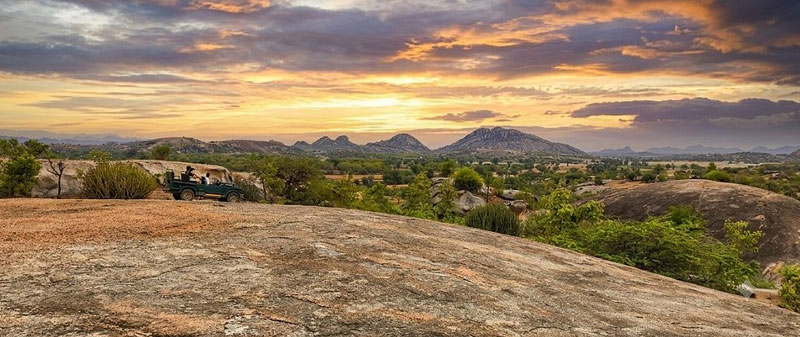
Rajasthan is often associated with forts, palaces and desert landscapes, but the state also offers two remarkably different big-cat safari experiences. One takes travellers through a protected tiger reserve filled with forests, lakes and historic ruins. The other crosses open granite hills where leopards live among villages, temples and rugged countryside.
That makes the Jawai vs Ranthambore decision far more interesting than simply choosing between leopards and tigers.
Ranthambore is one of India's best-known tiger destinations. Its established safari system, designated tourism zones and dramatic combination of wildlife and historic architecture attract visitors from India and overseas. Jawai offers something completely different. Here, Jawai leopard safari drives move through a rocky landscape rather than a conventional dense national park setting.
Neither destination should be treated as a guaranteed big-cat sighting. Wild animals decide when and where they appear. The better destination depends on the wildlife you want to see, the landscape you enjoy, your tolerance for crowds, the amount of time available and the kind of accommodation you prefer.
The biggest mistake when comparing Jawai or Ranthambore is assuming that they provide two versions of the same safari.
Ranthambore is a recognised national park and tiger reserve. Rajasthan Tourism describes it as a dry-deciduous forest landscape with hills, crags, meadows, lakes and rivulets. The wildlife list extends well beyond tigers and includes leopards, sloth bears, hyenas, jackals, nilgai, sambar, chital, crocodiles and numerous bird species.
The famous Ranthambore Fort overlooking parts of the wilderness gives the reserve a visual identity that is difficult to confuse with any other Indian tiger destination.
A Ranthambore tiger safari operates through an organised park system. Visitors enter designated tourism areas using authorised safari vehicles and follow prescribed routes and timings. This creates a more structured wildlife experience.
Jawai feels much more open.
The Jawai leopard safari landscape consists of granite formations, scrub, agricultural areas, water bodies and villages. Leopards use caves and rocky outcrops across this terrain. Open 4x4 vehicles are commonly used for safari drives.
At Jawai Nature Stay, seasonal safari schedules currently list summer drives at approximately 5:00 AM to 8:00 AM and 5:00 PM to 8:00 PM, while winter drives are approximately 6:00 AM to 9:00 AM and 4:00 PM to 7:00 PM. Operational timings can change, so guests should confirm their reporting time before arrival.
The property currently lists a private leopard safari at approximately ₹4,500 per Gypsy per safari. Rates can change according to operating conditions and the package booked, so the current amount should always be confirmed before payment.
Jawai also allows travellers to combine the leopard drive with other local wildlife activities. Jawai Dam and surrounding wetlands support birdlife and crocodiles, while village areas give visitors a view of rural life around the leopard habitat.
There is another important practical difference.
Ranthambore's popularity means advance reservations matter. Rajasthan Tourism specifically advises visitors to make reservations in advance. Travellers arriving during busy periods should not assume that their preferred safari date, vehicle or zone will remain available.
For someone who likes the atmosphere of a major Indian national park, Ranthambore has a clear advantage. For someone who wants leopard safari in Rajasthan in an unusual rocky setting, Jawai has a completely different appeal.
A Jawai safari is not simply about finding a leopard. It is about reading the rocky terrain, watching village life unfold around wildlife habitat, discovering birdlife near the dam and experiencing a very different side of Rajasthan.
Your target species should influence the decision more than social-media photographs.
Choose Ranthambore primarily if seeing a wild Bengal tiger is the central purpose of the journey. Tigers are the headline attraction, although a safari can produce many other wildlife encounters even when a tiger does not appear.
A good Ranthambore drive should therefore not be judged exclusively by whether a tiger walks across the road.
Sambar, chital, nilgai, langurs, crocodiles and birds all contribute to the forest experience. Sloth bears and leopards are present as well, although sightings depend on movement, habitat and luck. The lakes, dry forest and old ruins can make even a big-cat-free drive visually rewarding.
Choose Jawai when the Indian leopard is the priority.
Jawai's granite hills create a very different form of leopard tracking. Drivers and local trackers watch rocky ridges, caves and known movement areas rather than following a conventional forest road in search of a tiger.
The open nature of parts of the landscape also changes photography. A leopard may appear against bare granite, sit on a distant ridge or move between rocks. Long lenses are therefore particularly useful.
Wildlife photographers should carry realistic equipment rather than expecting every animal to appear beside the vehicle. A telephoto lens in the 300mm to 500mm range can be extremely useful for distant leopard photography. Binoculars are equally valuable for guests who do not carry professional camera equipment.
Jawai Dam adds another dimension. Birdwatchers may encounter resident and seasonal birdlife around the water, while mugger crocodiles are associated with the wetland environment. A dedicated bird and crocodile outing can therefore complement the leopard drive.
No responsible Jawai leopard safari booking should promise a leopard.
The same rule applies to Ranthambore and tigers. Claims of guaranteed sightings should be treated cautiously because these are free-ranging wild animals.
The more useful question is what you want the hours before and after a sighting to feel like.
In Ranthambore, the appeal lies in entering a famous tiger landscape and reading signs of wildlife through forest, grassland and water. In Jawai, much of the appeal comes from scanning massive granite formations and seeing how wildlife survives remarkably close to human settlements.
For serious tiger enthusiasts, Ranthambore is the obvious choice. For travellers who have already visited tiger reserves such as Ranthambore, Bandhavgarh or Kanha and want a different big-cat setting, Jawai wildlife safari can feel refreshingly different.
Budget comparisons between Jawai and Ranthambore safari trips should include much more than the jeep price.
A realistic wildlife budget includes accommodation, safari charges, transport to the destination, meals, local transfers and the number of drives you intend to take.
Ranthambore offers a very wide accommodation market around Sawai Madhopur. Travellers can find relatively simple hotels, mid-range properties, heritage-style accommodation and some of India's most expensive wildlife lodges.
That range makes Ranthambore suitable for very different budgets, but safari availability can become the limiting factor during busy travel periods.
It is sensible to stay at least two nights if wildlife is the main purpose of the trip. Booking more than one safari gives you different light, weather and wildlife movement rather than putting the entire journey on a single drive.
Jawai also works particularly well as a two-night stop.
A guest can arrive during the day, take an evening safari, stay overnight, take another drive the following morning and still have time for Jawai Dam or a quieter afternoon at the property. A second night makes the schedule considerably less rushed.
For travellers comparing Jawai safari cost, Jawai Nature Stay currently publishes a private Gypsy safari rate of around ₹4,500 per safari. The vehicle format can make private safari travel particularly practical for couples, families and small groups because they can occupy the vehicle together rather than calculating the trip purely as a per-person activity.
Accommodation changes the overall budget considerably. A tented stay, family room, luxury room or premium wildlife lodge will naturally create different package totals. Travellers should therefore compare what is actually included rather than judging two packages from their headline prices.
Ask whether breakfast and dinner are included. Confirm whether safari pickup is from the property. Check whether the quoted safari amount is per person or for the entire vehicle. Ask whether taxes are included. Confirm cancellation conditions before transferring money.
Crowds are another major difference.
Ranthambore receives substantial tourism because of its international tiger reputation and accessibility from Jaipur and Delhi. Safari gates, popular zones and accommodation areas can feel busy during peak periods.
Jawai generally attracts travellers seeking a smaller wildlife destination and rural setting. That does not mean every safari will be completely private or isolated, especially around an active leopard sighting. Multiple vehicles may converge when information about an animal's location spreads.
Travellers wanting absolute silence should therefore keep expectations realistic at both destinations.
For couples, Jawai can work exceptionally well when the priority is a quiet stay combined with one or two private safari drives. A Jawai safari stay can include early-morning wildlife, breakfast back at the property, time by the pool or around the accommodation, followed by another drive near sunset.
That rhythm suits travellers who do not want every hour of their holiday occupied.
Ranthambore suits couples who want wildlife combined with a famous Rajasthan landmark. Ranthambore Fort can add a heritage component, while Sawai Madhopur provides a larger tourism infrastructure.
Families should consider the age and patience of children before choosing either destination.
A three-hour early-morning safari can be exciting for children interested in animals but tiring for very young travellers, particularly in cold winter mornings or hot weather. Parents should carry drinking water, suitable clothing and basic sun protection.
Jawai's ability to combine leopard safari, Jawai Dam and bird watching can help families vary the trip rather than repeating identical drives.
For photographers, the choice is more specialised.
Ranthambore provides opportunities for tiger portraits, forest scenes, lakes, ruins and wider environmental compositions. Jawai offers granite backgrounds, ridge-line leopard sightings, rural landscapes and dramatic open terrain.
Photographers visiting Jawai should not expect every leopard to be at close range. A distant animal resting high on granite can still produce an exceptional environmental photograph, but it requires the right lens and realistic expectations.
The destinations can also be combined into a larger Rajasthan wildlife journey rather than treated as competitors.
A traveller with sufficient time could use Ranthambore for tiger habitat and Jawai for leopard country, creating two completely different big-cat experiences in the same state.
For shorter holidays, the route matters. Ranthambore is convenient for itineraries centred on Jaipur and eastern Rajasthan. Jawai fits naturally between Udaipur and Jodhpur and also works well with Ranakpur and Kumbhalgarh.
That geographic difference can make the decision surprisingly easy.
If your Rajasthan route already includes Udaipur, Ranakpur and Jodhpur, diverting to a distant tiger reserve may consume valuable road time. Jawai can sit naturally within the route while adding a genuine wildlife component.
If Jaipur is already central to the itinerary and tiger tracking is a priority, Ranthambore becomes much more logical.
Jawai is not a conventional tiger-reserve experience. Its granite hills, rocky caves, open countryside and village landscapes create a distinctive setting for leopard tracking.
Choose Ranthambore National Park when the Bengal tiger is the primary wildlife objective, you enjoy classic national-park safaris, you want forest and lake scenery, and you are comfortable with a popular destination where advance safari reservations are important.
Choose Jawai leopard safari when you specifically want to see leopard habitat, prefer granite hills and open landscapes, want a quieter rural stay, or need a wildlife destination that fits conveniently between Udaipur and Jodhpur.
For travellers who have never taken an Indian wildlife safari and have always dreamed of seeing a tiger, Ranthambore deserves serious consideration.
For travellers who have already experienced tiger reserves, Jawai offers something substantially different rather than trying to imitate them.
The strongest Jawai trip is usually not about racing into the hills, photographing a leopard and leaving. Stay long enough to see the landscape in different light. Take an early drive. Watch the granite turn warm near sunset. Spend time around the dam and pay attention to smaller wildlife as well as the big cats.
Guests considering Jawai leopard safari with stay should ideally reserve their accommodation and safari together before arrival, particularly during busy holiday periods. Confirm the exact safari time because seasonal daylight affects departure schedules.
The best safari destination is ultimately the one that matches the wildlife and landscape you actually want—not the destination with the louder reputation.
If your Rajasthan journey calls for tigers, forest tracks and one of India's iconic reserves, Ranthambore fits naturally.
If it calls for leopards, granite hills, private 4x4 drives and a slower stay in rural Rajasthan, Jawai deserves the space in your itinerary.
They serve different wildlife interests. Jawai is best known for leopard safaris across granite landscapes, while Ranthambore is primarily chosen for Bengal tiger safaris in a national park environment. The better option depends on the animal, scenery and safari format you prefer.
Travellers specifically interested in leopards generally choose Jawai leopard safari because leopards are the central focus of safari activity there. Ranthambore contains leopards, but tiger sightings are the primary attraction for most visitors.
Ranthambore is the appropriate choice. Ranthambore Tiger Reserve is one of Rajasthan's principal tiger safari destinations. Wildlife sightings remain natural and can never be guaranteed.
Jawai Nature Stay currently lists a private leopard safari at approximately ₹4,500 per Gypsy per safari. Rates can change, so guests should confirm the applicable price, inclusions and pickup arrangements when booking.
Jawai Nature Stay currently lists approximately 5:00 AM–8:00 AM and 5:00 PM–8:00 PM in summer, and 6:00 AM–9:00 AM and 4:00 PM–7:00 PM in winter. Actual reporting and departure times should be reconfirmed before the safari.
Two nights in Jawai work well for most travellers. This allows enough time for morning and evening wildlife activities without turning the visit into a rushed overnight stop.
Keeping at least two nights is sensible for a wildlife-focused visit. Multiple safari drives provide more opportunities to experience different areas, conditions and wildlife movement than relying on a single safari.
Yes. Families can combine a Jawai leopard safari with Jawai Dam, bird watching and relaxed time at their accommodation. Parents travelling with young children should consider early starts, weather conditions and the duration of jeep drives.
Yes, provided sufficient travel time is available. The two destinations complement each other because Ranthambore provides a tiger-reserve experience while Jawai provides a granite-hill leopard landscape. Travellers should allow enough days for road transfers rather than rushing between them.
No. Neither Jawai leopard sightings nor Ranthambore tiger sightings can responsibly be guaranteed. Both involve free-ranging wild animals. A good safari should be valued for the complete habitat, tracking process, landscapes, birds and other wildlife rather than a guaranteed big-cat photograph.
Planning to visit Jawai? Need help with your stay or safari?
Get free, expert assistance from our team — no pressure, just honest guidance.
Any query? Write us mail.
info@jawainaturestay.com
Call to Inquire (08:00 - 20:00 hrs)
+91 9257995999
Talk to Experts
Whatsapp