
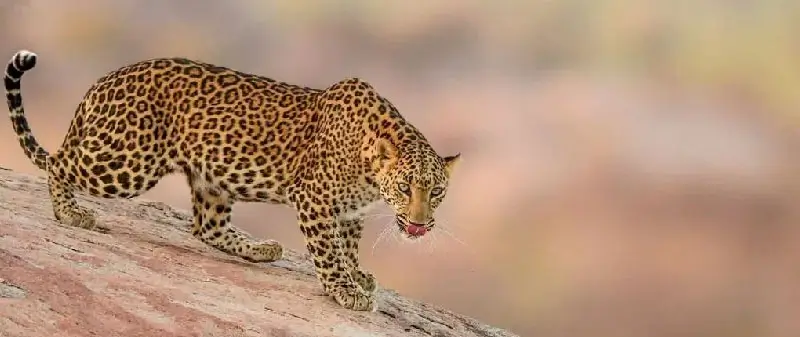
The Indian leopard is one of the most resilient and adaptable big cats found anywhere in the world. While tigers often dominate public imagination, the leopard has quietly survived and thrived across landscapes that range from dense forests and rocky hills to farmlands and village edges. Its ability to adjust to changing environments has made it the most widely distributed large predator in India.
Unlike other big cats that depend heavily on protected forests, the Indian leopard has learned to live alongside humans. This coexistence is not accidental but the result of intelligence, behavioral flexibility, and ecological balance. Understanding the Indian leopard requires looking beyond fear and conflict narratives to appreciate its role as a vital component of India’s natural heritage.
This guide explains everything essential about the Indian leopard, including its physical traits, habitat range, hunting behavior, social structure, intelligence, adaptability, and relationship with humans.
The Indian leopard is instantly recognizable by its muscular build, powerful limbs, and distinctive rosette-patterned coat. The coat color ranges from pale yellow to rich golden hues, allowing effective camouflage across varied terrains. These rosettes break the animal’s outline, making it difficult to detect in forests, rocky hills, and dry landscapes.
Compared to tigers, Indian leopards are smaller in size but significantly more agile. Their compact build allows rapid acceleration, sudden directional changes, and effortless climbing. Strong shoulder muscles and powerful jaws enable them to carry prey heavier than their own body weight, often lifting kills into trees to avoid scavengers.
This combination of strength, stealth, and agility makes the Indian leopard one of the most efficient predators in the subcontinent.
Discover the majestic Indian Leopard in its natural habitat at Jawai. Book a thrilling leopard safari, enjoy peaceful landscapes, and experience authentic local culture with expert guides.
Indian leopards occupy one of the widest habitat ranges among large carnivores in India. They are found in tropical forests, dry deciduous woodlands, mangroves, grasslands, rocky plateaus, and agricultural landscapes. This extraordinary adaptability allows them to survive in regions where other predators cannot.
From the Himalayan foothills to central India and the western arid zones, leopards adjust their behavior based on terrain and prey availability. Regions like Jawai demonstrate how leopards can thrive in open rocky landscapes, while forested reserves show their ability to remain elusive in dense vegetation.
This flexibility explains why the Indian leopard population remains widespread despite habitat pressures.
Indian leopards are opportunistic hunters with a highly flexible diet. They prey on deer, antelope, wild boar, monkeys, birds, reptiles, and smaller mammals. In human-dominated landscapes, leopards may adapt their diet based on available prey, showcasing remarkable survival intelligence.
Hunting relies on stealth rather than endurance. Leopards stalk silently, using terrain and vegetation as cover. Once within striking distance, they launch a rapid ambush, targeting the neck or throat. This method minimizes struggle and energy expenditure.
A defining behavior of Indian leopards is their tendency to drag prey into trees. This behavior protects kills from scavengers such as hyenas and ensures uninterrupted feeding. Their climbing ability is unmatched among big cats.
Indian leopards are solitary animals, preferring to live and hunt alone. Each individual maintains a territory marked through scent, scratches, and vocalizations. Territory size depends on prey density and habitat quality.
Male territories are typically larger and may overlap with those of multiple females. Females maintain smaller ranges focused on denning sites. Direct conflict between adults is rare, as leopards rely on avoidance and signaling rather than confrontation.
This solitary lifestyle reduces competition and supports population stability across fragmented landscapes.
Leopard reproduction is marked by secrecy and protection. Females give birth in secluded dens located in caves, rocky crevices, thick vegetation, or abandoned structures. Cubs are born blind and remain entirely dependent on their mother during early weeks.
The mother frequently relocates cubs to reduce predation risk. As cubs grow, they learn survival skills through observation and practice. Hunting lessons begin gradually, preparing them for independence.
Cubs remain with their mother for an extended period before dispersing, a strategy that enhances survival in complex environments.
The Indian leopard is widely regarded as one of the most intelligent big cats. Its ability to assess risk, modify behavior, and exploit diverse habitats demonstrates advanced problem-solving skills.
In human-dominated landscapes, leopards adjust activity patterns to avoid conflict. They may become more nocturnal, alter movement routes, or select hidden resting sites. This adaptability allows coexistence rather than constant confrontation.
Regions where communities understand leopard behavior often experience fewer conflicts, highlighting the role of awareness and tolerance in conservation.
Human–leopard coexistence is one of the most complex aspects of wildlife management in India. Unlike tigers that require large protected forests, leopards often live near villages, farms, and towns.
In many areas, cultural beliefs and traditional practices discourage harm to leopards. This tolerance allows leopards to exist with minimal persecution. Jawai stands as a prominent example, where leopards and humans share space peacefully.
Education, habitat protection, and responsible tourism strengthen coexistence models that benefit both people and wildlife.
Indian leopards play a crucial ecological role as apex or near-apex predators. By regulating prey populations, they prevent overgrazing and maintain habitat balance.
Their presence influences prey behavior, shaping ecosystem dynamics beyond direct predation. Healthy leopard populations contribute to biodiversity and ecological resilience.
Protecting leopards therefore supports broader conservation goals across landscapes.
Step into the wild landscapes of Jawai, where leopards roam freely among ancient granite hills. Enjoy a peaceful and exclusive safari experience guided by local experts.
Despite their adaptability, Indian leopards face numerous threats. Habitat fragmentation, infrastructure expansion, poaching, and human conflict pose ongoing challenges.
Road networks and urban growth reduce safe corridors, increasing mortality risk. Conservation efforts focus on habitat connectivity, community engagement, and conflict mitigation.
Understanding leopard behavior is essential to addressing these threats effectively.
Conservation strategies for Indian leopards emphasize coexistence rather than isolation. Protecting corridors, educating communities, and regulating tourism are central to long-term success.
Research and monitoring provide insights into population trends and movement patterns. These efforts help balance development with wildlife preservation.
The future of the Indian leopard depends on continued tolerance, informed policy, and responsible human behavior.
The Indian leopard symbolizes resilience in a changing world. Its ability to adapt, endure, and coexist reflects qualities essential for survival amid environmental challenges.
For wildlife enthusiasts, photographers, and researchers, observing an Indian leopard offers insight into intelligence, strength, and balance within nature.
Fear often arises from misunderstanding. Learning about leopard behavior reveals an animal focused on survival rather than aggression.
Awareness transforms fear into respect, fostering coexistence and conservation support.
The Indian leopard is an inseparable part of India’s ecological and cultural landscape. Protecting it preserves not only biodiversity but also traditional coexistence practices rooted in respect for nature.
Its adaptability to diverse landscapes and coexistence with humans.
Across forests, hills, farmlands, and rocky terrains throughout India.
They generally avoid humans and conflict is rare where coexistence exists.
Through stealth, ambush, and powerful neck bites.
To protect kills from scavengers and competitors.
Yes, they are solitary except during mating and cub rearing.
By altering movement patterns and activity timings.
Habitat loss, fragmentation, and occasional conflict.
They regulate prey populations and maintain ecosystem balance.
Through awareness, tolerance, and responsible tourism.

Planning to visit Jawai? Need help with your stay or safari?
Get free, expert assistance from our team — no pressure, just honest guidance.
Any query? Write us mail.
info@jawainaturestay.com
Call to Inquire (08:00 - 20:00 hrs)
+91 9257995999
Talk to Experts
Whatsapp