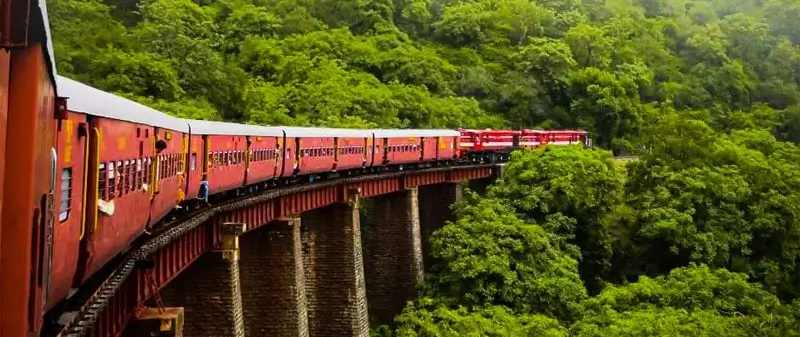
How to Plan a Goram Ghat Tour is best treated as a practical Aravalli travel day rather than a quick photo stop. Goram Ghat is closely associated with the scenic railway section around the Khamli Ghat–Phulad belt, where the rail line, hill terrain and rural scenery create the main attraction. Train schedules, fares and operating patterns can change, so live railway information should always take priority over old timetable screenshots or social-media posts.
Travelers should first decide whether the scenic rail journey is the main purpose of the day or whether Goram Ghat is one stop in a wider Rajasthan route. Stations used for the hill section can include Khamli Ghat, Phulad and Marwar Junction, depending on the train operating on the chosen date. The exact train number, boarding station, departure time and reservation status should be checked through official Indian Railways channels shortly before travel.
The term “toy train” is frequently used in tourism content, but passengers should rely on the actual railway service name and train number shown by the railway system. Some services may be reserved while others may have different ticketing arrangements. Fare therefore cannot be responsibly presented as one permanent figure for every visitor. It changes with train, class, origin and railway revisions.
Road access is useful even for rail-focused visitors because a car solves the first-mile and last-mile problem. A pre-booked driver can drop guests at the correct station and collect them from the arrival point. This is particularly important for travelers continuing to Ranakpur, Kumbhalgarh or Jawai with luggage.
Keep generous buffer time. Small-station facilities can be basic, and rail delays can affect onward transfers. Daylight is valuable for scenery and photography, so an early start usually produces a better outing than reaching the hill section near sunset.
A memorable Goram Ghat tour begins with the right planning. From choosing the best route and timing to making space for the unexpected beauty along the way.
The central attraction is the Goram Ghat scenic train journey through the Aravalli terrain. Curves, cuttings, bridges and changing elevations create a very different rail experience from Rajasthan’s broad plains. The journey is especially appealing to railway enthusiasts, landscape photographers and families seeking a short activity outside the major city circuit.
Photography should remain within safe passenger areas. Visitors should not stand on active tracks, enter tunnels, climb railway structures or lean dangerously from moving coaches for a photograph. A telephoto or standard zoom lens is enough for most scenes, while a phone camera works well when light is good. Carry a power bank because navigation, video and photography can consume battery quickly.
Nearby stops can be chosen according to the direction of travel. Ranakpur, Kumbhalgarh, Narlai, Ghanerao and Jawai can fit into wider routes, but they should not all be forced into one day. Ranakpur suits temple architecture, Kumbhalgarh suits fort history, and Jawai suits wildlife and an overnight stay around a leopard safari.
Food choices around small railway points may be limited. Carry water and a light snack, then schedule a proper meal in a larger settlement or at the next hotel. This simple preparation keeps the day comfortable without turning the scenic rail outing into a rushed search for facilities.
Jawai is a particularly useful next stop because it changes the character of the trip from railway scenery to wildlife. Guests can travel by road after the rail section, check in at Jawai Nature Stay, have dinner and take a morning Jawai leopard safari the following day. This sequence works better than trying to complete a rail ride and safari in the same narrow time window.
The safari should be reserved in advance when travel falls on weekends or busy holiday dates. Ask whether the quote is for a full private jeep, whether pickup is from the property and how long the drive lasts. Leopard sightings are never guaranteed, but the safari also includes granite hills, birds, village scenery and the broader Jawai landscape.
Travelers who prefer a slower trip can stay two nights in Jawai and keep one evening free for sunset, birding or a village-oriented activity. Photographers may value two safari drives because different light and wildlife movement can produce very different results.
The Goram Ghat and Jawai route works for couples, families and international visitors because it combines two distinctive Rajasthan experiences without requiring a major detour. The key is to confirm the train first and build the road transfer and safari around the live timetable.
Rail ticket prices depend on the actual service and class. Use official railway enquiry or reservation channels for the current fare and avoid publishing an old fare as if it were permanent. If a train is unreserved, confirm where and how the ticket should be purchased. Carry valid identification where required and keep a screenshot or offline copy of the ticket.
A private car is normally the largest additional transport expense. Request a quotation that states pickup, drop, waiting, parking, tolls and driver allowance. Rates can rise for SUVs, long waiting periods, late-night movement or one-way outstation requirements. Travelers continuing to Jawai should compare a direct transfer quotation with a full-day vehicle.
Wear comfortable footwear, carry water, use sun protection and keep luggage light around small stations. During monsoon periods, check current rail and road conditions. Do not enter restricted railway areas for viewpoints or photographs. Families with children should maintain close supervision around platforms and moving trains.
A successful Goram Ghat day depends more on timing than on adding attractions. Confirm the live train, keep a road vehicle ready, protect daylight and leave enough buffer before the next hotel or safari. That approach gives the scenery time to feel memorable rather than rushed.
The best offbeat journeys need a little more thought. Plan your route, check your travel timing and give yourself enough time to enjoy the mountain scenery.
Before committing money, match every reservation to the same travel date and keep the sequence in writing. Start with the live railway service because a scenic rail outing depends on the train actually operating. Record the train number, boarding station, departure time, destination station and ticket status. If the service cannot be reserved online, confirm the correct local ticket method rather than assuming that a screenshot from another traveler will apply.
Next, give the road driver the exact station name and scheduled arrival time. Similar-sounding place names can create confusion, and a driver waiting at the wrong station can remove the buffer needed for the next hotel. Ask for the vehicle registration or driver contact before departure where possible. If the journey continues to Jawai, tell the resort the expected arrival window and whether dinner will be required after check-in.
For a safari stay, confirm the safari slot separately from the room. The written confirmation should show whether the jeep is private, where pickup takes place, how many guests it accommodates and what amount is payable. Do not schedule the safari immediately after the theoretical train arrival time. Rail delays, platform movement and the road transfer all require a margin.
Weather deserves a final check as well. Strong rain can change the comfort of hill roads and outdoor photography. In hot weather, carry more water than expected. In cooler months, a light layer is useful during early starts. Keep cash for small local expenses, but avoid carrying unnecessary valuables during the rail outing.
Readers should also distinguish between a scenic journey and unsafe social-media behavior. The best photographs do not require entering a tunnel, walking on an active track or standing near a moving train. Use stations, permitted passenger areas and safe roadside viewpoints. This keeps the trip practical for families as well as photographers.
A final message to all service providers on the evening before travel can prevent most avoidable problems. Reconfirm the train, driver, hotel arrival and safari. That five-minute check is far more useful than adding another attraction to an already full schedule.
Goram Ghat is in Rajasthan’s Aravalli region and is best known for the scenic railway section around the Khamli Ghat and Phulad belt.
Use official Indian Railways enquiry or reservation channels close to the travel date because train numbers, operating days and timings can change.
The fare depends on the actual train, boarding point and class. Check the live railway fare instead of relying on an old fixed amount.
It depends on the service operating on your date. Confirm whether the train is reserved or uses another ticketing method before reaching the station.
Yes, when the train timing and road pickup are coordinated and the day is not overloaded with distant attractions.
Yes. A road transfer after the rail journey followed by an overnight stay in Jawai works well.
Yes, but an overnight stay followed by a morning safari is usually more comfortable than a tight same-day connection.
Yes, especially for railway and Aravalli scenery, but photographs should be taken only from safe and permitted areas.
Carry identification, water, light snacks, comfortable shoes, sun protection, a charged phone and offline ticket details.
Travelers continuing toward Jawai can stay at Jawai Nature Stay and arrange safari-related requirements in advance.
Planning to visit Jawai? Need help with your stay or safari?
Get free, expert assistance from our team — no pressure, just honest guidance.
Any query? Write us mail.
info@jawainaturestay.com
Call to Inquire (08:00 - 20:00 hrs)
+91 9257995999
Talk to Experts
Whatsapp