
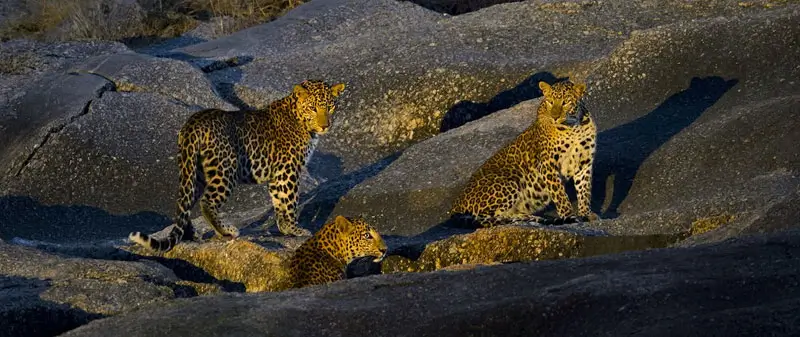
Jawai Rajasthan has gained international attention for one remarkable reason: the visible and consistent presence of leopards living freely outside protected national parks. Unlike fenced reserves or restricted safari zones, Jawai represents an open landscape where leopards, pastoral communities, temples, and rural life coexist naturally. This rare balance raises one of the most frequently asked questions by wildlife enthusiasts and travelers alike—how many leopards actually live in Jawai Rajasthan?
The answer is not a fixed number, and that uncertainty is part of what makes Jawai ecologically significant. Leopard populations here are not confined to artificial boundaries. Instead, they move across granite hills, grazing land, village edges, and seasonal water zones. Understanding leopard numbers in Jawai requires looking beyond census figures and examining habitat quality, prey availability, coexistence practices, and movement patterns.
This detailed guide explains leopard population dynamics in Jawai Rajasthan, how estimates are made, why Jawai supports a healthy leopard presence, and what this means for conservation and responsible tourism.
Traditional wildlife reserves rely on defined park boundaries and structured census methods. Jawai operates differently. There are no official park gates, buffer zones, or core safari areas. Leopards roam freely across a mosaic of landscapes that extend far beyond any single administrative boundary.
Because of this open system, leopard numbers in Jawai cannot be expressed as a single static figure. Population estimates fluctuate based on seasonal movement, prey migration, breeding cycles, and territorial overlap. Leopards may move between Jawai, nearby forest patches, agricultural land, and rocky outcrops depending on conditions.
This fluid movement is a key reason Jawai remains one of the most resilient leopard habitats in Rajasthan.
Jawai is known for its incredible leopard population and rocky landscapes that make wildlife sightings easier than many other places in India. Plan your stay at Jawai Nature Stay and enjoy thrilling leopard safaris while exploring the natural beauty of this unique destination.
Based on long-term observations by local trackers, wildlife researchers, and safari guides, Jawai and its surrounding landscape support a significant and stable leopard population relative to its size. Rather than focusing on an exact count, experts emphasize density and visibility.
Leopards in Jawai are frequently sighted due to the region’s open granite terrain, which naturally exposes resting and movement points. This visibility often creates the impression of unusually high leopard numbers. In reality, Jawai’s geography simply allows leopards to be observed more easily compared to dense forests.
What matters most is that Jawai consistently supports multiple territorial adults, breeding females, sub-adults, and dispersing individuals. This indicates a healthy population structure rather than isolated presence.
Jawai’s granite hills form the backbone of its leopard population. These massive rock formations provide natural dens, shaded resting spots, elevated viewpoints, and escape routes. Leopards use these hills as safe zones during the day, retreating into crevices and caves away from disturbance.
The rocky terrain also supports ambush hunting, allowing leopards to stalk prey silently. This natural architecture reduces competition with other predators and enhances survival rates, contributing to a stable leopard population in Jawai Rajasthan.
A healthy predator population depends on prey availability, and Jawai offers a diverse prey base. Leopards here feed on wild species such as deer, smaller mammals, and birds, along with natural prey found near grazing land.
The presence of pastoral communities indirectly supports prey density by maintaining grasslands and water access. This balanced food chain reduces pressure on livestock and minimizes conflict, a crucial factor in sustaining leopard populations in Jawai.
One of the most important reasons Jawai supports a stable leopard population is coexistence. Local communities have lived alongside leopards for generations, developing tolerance, awareness, and adaptive practices.
Leopards are respected rather than persecuted. Temples near leopard habitats reinforce cultural beliefs that discourage harm. This social acceptance allows leopards to move freely without constant threat, a rare situation in modern wildlife landscapes.
This coexistence model directly influences leopard survival and population stability in Jawai Rajasthan.
Leopards are territorial animals, and Jawai’s landscape allows multiple territories to exist in close proximity without conflict. Granite hills create natural divisions, reducing overlap and competition.
Adult males establish larger territories, while females maintain smaller ranges centered around denning sites. Sub-adults eventually disperse, sometimes moving to nearby regions. This natural dispersal prevents overcrowding and maintains ecological balance.
The presence of multiple overlapping territories is a strong indicator of a healthy leopard population structure.
Jawai has consistently recorded successful leopard breeding over the years. Females select secluded dens within rocky terrain, providing safety for cubs during early development.
Cub survival rates are relatively high due to minimal disturbance and abundant shelter. This contributes to population continuity and long-term stability. Observations of cubs and sub-adults further confirm that Jawai functions as a breeding landscape rather than a transit zone.
High visibility does not necessarily equal high population numbers. Jawai’s open terrain allows leopards to be seen resting on rocks during daylight hours, a behavior less visible in forested areas.
This visibility has made Jawai famous among wildlife photographers and safari travelers. However, experts emphasize that what truly matters is population health, not just sightings.
Compared to forested reserves, Jawai offers higher visibility but similar population density. The difference lies in landscape openness and human tolerance.
In many regions, leopards remain hidden due to dense vegetation or human pressure. Jawai’s acceptance model allows leopards to behave naturally, increasing daytime activity and sightings.
Jawai is known for its incredible leopard population and rocky landscapes that make wildlife sightings easier than many other places in India. Plan your stay at Jawai Nature Stay and enjoy thrilling leopard safaris while exploring the natural beauty of this unique destination.
Responsible tourism plays a critical role in maintaining leopard populations in Jawai. Ethical safari practices, controlled vehicle numbers, and experienced local guides ensure minimal disturbance.
Tourism revenue also supports local livelihoods, reinforcing coexistence. When communities benefit from wildlife presence, protection becomes collective rather than enforced.
Despite its success, Jawai faces challenges. Infrastructure expansion, increased tourism pressure, and habitat fragmentation pose risks if unmanaged.
Sustainable planning, regulated tourism, and habitat protection are essential to ensure leopard populations remain stable. Awareness among visitors and operators is equally important.
In open landscapes like Jawai, population balance matters more than fixed numbers. A healthy leopard population is defined by breeding success, territory stability, prey availability, and low conflict levels.
Jawai continues to meet these criteria, making it one of Rajasthan’s most significant leopard landscapes.
Jawai demonstrates that coexistence, cultural respect, and ethical tourism can sustain large predators outside protected areas. This model challenges conventional conservation approaches and offers valuable lessons.
Protecting leopards does not always require fences; it requires understanding, tolerance, and balance.
The combination of habitat quality, prey availability, human tolerance, and responsible tourism ensures Jawai remains a stronghold for leopards in Rajasthan.
As long as these factors remain aligned, Jawai will continue to support a healthy and visible leopard population.
There is no fixed number, but Jawai supports a stable and healthy leopard population.
Open granite terrain allows greater visibility compared to dense forests.
Yes, leopards coexist peacefully near rural settlements.
No, Jawai is an open landscape without formal park boundaries.
Yes, regular breeding and cub sightings indicate population stability.
Responsible tourism supports conservation when managed ethically.
Jawai offers similar density with higher visibility due to terrain.
Conflict is rare due to long-standing coexistence practices.
It demonstrates successful coexistence outside protected areas.
With sustainable practices, Jawai can continue supporting leopards long-term.

Planning to visit Jawai? Need help with your stay or safari?
Get free, expert assistance from our team — no pressure, just honest guidance.
Any query? Write us mail.
info@jawainaturestay.com
Call to Inquire (08:00 - 20:00 hrs)
+91 9257995999
Talk to Experts
Whatsapp