
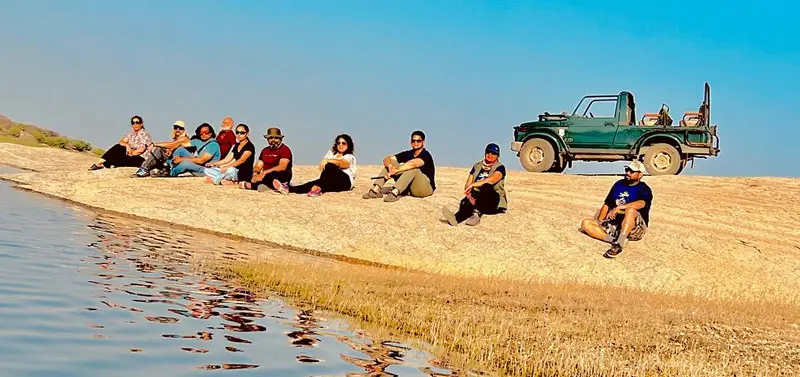
Jawai’s breathtaking beauty is often associated with its granite hills and free-roaming leopards, but the destination holds another treasure that many travellers overlook — its serene, untouched, hidden lakes. These water bodies are scattered across the Jawai landscape, forming natural habitats for migratory birds, crocodiles, and diverse wildlife. Their calm waters reflect the colours of the sky during sunrise and sunset, creating some of the most photogenic views in Rajasthan.
While Jawai Bandh is widely known, the true magic lies in the smaller, secluded lakes that remain unmarked on tourist maps. These lakes are visited mainly by locals, photographers, and naturalists who understand how important water is to the Jawai ecosystem. The hidden lakes provide life to wildlife, peace to travellers, and an incredible opportunity to witness Jawai beyond the safari zone.
From remote waterbeds tucked between granite boulders to reflective lakes surrounded by unusual rock architecture, each lake has its own atmosphere and story. This detailed guide takes you through the lesser-known, scenic, peaceful lakes of Jawai that are perfect for sunset watching, bird photography, and quiet nature moments.
What makes Jawai’s lakes unique is their natural formation. Unlike artificial water bodies in tourist towns, Jawai’s lakes are shaped by:
These lakes become water sources for wildlife, creating thriving ecosystems during every season.
The rock formations around Jawai act like ancient bowls, holding water and creating landscapes far more dramatic than flatland lakes. This makes the hidden lakes perfect for travellers seeking raw, untouched wilderness.
The lakes of Jawai are not just scenic attractions — they are lifelines. They support a wide range of species, including migratory birds, crocodiles, wolves, jackals, hyenas, and even leopards who often drink from lakes during late evenings or early mornings.
The lakes also help maintain a stable bird population. Jawai attracts:
These lakes become essential resting and feeding points for birds migrating from Central Asia, Europe, and Russia.
Plan your stay & discover nature with expert local guidance.
One of the most peaceful lakes in Jawai lies near the village of Perwa. Surrounded by smooth granite slopes, the lake becomes a mirror at sunset, reflecting pink and gold tones. It is one of the most recommended lakes for reflection photography, where the stillness of water creates perfect symmetry.
Birds like herons, kingfishers, and egrets frequent the area, making it ideal for wildlife photographers seeking slow, patient frames away from safari crowds.
The lake is also known for occasional movement of crocodiles, especially during warm afternoons when they come close to the surface to regulate their body temperature.
The region between Bera and Bisalpur hides a beautiful water body tucked behind rock walls. This lake remains unknown to most travellers because it is not visible from the main road and requires local guidance to reach.
Once you arrive, the silence is overwhelming — only broken by the calls of birds or rustling of wind. The lake is commonly visited by:
The dramatic rock architecture around this lake makes it perfect for sunset travellers who desire a quiet spot without disturbance.
Kothar village has a seasonal lake that appears after monsoon and stays alive until early summer. Its formation depends on rainfall, making it a temporary but mesmerising attraction.
During monsoon:
This makes the Kothar lake one of the most scenic post-monsoon spots in Jawai.
Devgana Hills, known for its impressive rock formations, hide a remote water collection point behind the boulders. This lake is difficult to access without a local guide, but its beauty is unmatched.
It is known for:
The peaceful atmosphere makes it ideal for travellers seeking solitude in nature.
Some lakes in Jawai serve as perfect habitats for mugger crocodiles, particularly during winter when they bask on rock surfaces.
These lakes offer incredible wildlife interactions:
The contrast of calm water and hidden reptiles adds thrill to the peaceful setting.
Sunset around Jawai’s lakes is a magic-filled experience. The granite landscape glows in warm colours, while the water mirrors the sky. Every hidden lake offers a unique sunset angle:
Travellers often enjoy more peaceful sunsets here compared to safari viewpoints.
The hidden lakes provide ideal conditions for birdwatching. Early mornings and late afternoons attract maximum activity. Birds use these lakes for feeding, preening, resting, and social gatherings.
You commonly spot:
Quiet lakes offer better photographic angles without disturbance.
Jawai is famous for safaris, but travellers who go beyond leopard zones discover a unique world. These lakes offer:
Hidden lakes provide a deeper understanding of Jawai’s ecosystem while giving travellers space to enjoy nature at their own pace.
Yes, they are safe when visited with a local guide familiar with the terrain.
Leopards rarely drink from these lakes openly but may pass nearby during early morning or night.
Some are accessible by jeep, while others require a short walk.
Winter and post-monsoon months offer the best colours and wildlife activity.
Yes, certain lakes do have crocodile presence, especially in deeper areas.
Photography is allowed and highly recommended due to scenic landscapes.
Yes, many migratory and resident birds gather around these water bodies.
No, hidden lakes remain peaceful and crowd-free.
Some lakes are permanent, while others are seasonal depending on rainfall.
Yes, families can visit safely with proper guidance and timing.
Planning to visit Jawai? Need help with your stay or safari?
Get free, expert assistance from our team — no pressure, just honest guidance.
Any query? Write us mail.
info@jawainaturestay.com
Call to Inquire (08:00 - 20:00 hrs)
+91 9257995999
Talk to Experts
Whatsapp